Why a US Strike on Iran Would Be More About Show Than Real Impact
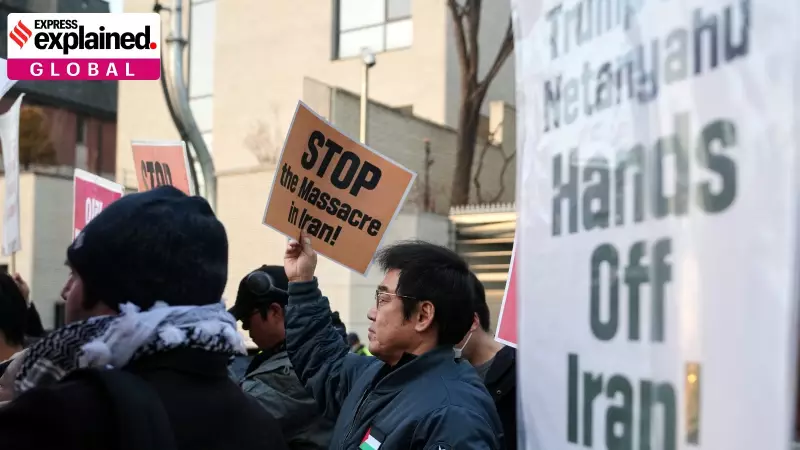
An expert explains that a potential American attack on Iran might focus more on creating a spectacle than achieving substantial goals. The need to show that US threats are credible could drive such an action, followed by limited Iranian retaliation.
Fluctuating US Stance and Military Moves
US President Donald Trump has made a series of shifting statements about Iran. On January 2, he posted that the US stood "locked and ready" to help protestors if the Iranian regime harmed demonstrators. By January 12, he claimed Iran wanted to negotiate, but soon after, he canceled meetings and urged Iranians to keep protesting.
Military actions accompanied these words. The US began moving troops out of the Al Udeid airbase in Qatar on January 14 to protect them from potential Iranian retaliation. US missions in Saudi Arabia advised caution, and Iran closed its airspace briefly.

Trump later announced on January 15 that Iran had "stopped killing protestors" and halted some executions, suggesting a de-escalation. However, the White House declared on January 16 that all options remain on the table, highlighting the ongoing uncertainty.
Reasons for US Hesitation
America faces several constraints that make a full-scale attack unlikely. Military preparedness in West Asia is insufficient, with carrier strike groups deployed elsewhere. If Washington attacks, it would likely use standoff methods to avoid ground troops in a new war.
Even as the USS Abraham Lincoln sails towards the Gulf, the US knows it cannot afford a messy Iranian transition. Targeting government and Revolutionary Guards' strongholds does not guarantee a stable pro-US Tehran. There is no clear set of policy objectives that an attack could achieve.
Trump has refused to meet Reza Pahlavi, the son of Iran's deposed Shah, despite online support. Pahlavi has tried to lead demonstrations with little success. External aerial interventions rarely topple regimes in large, cohesive countries like Iran without civil war.
Gulf states, including the UAE and Saudi Arabia, strongly oppose an American war on Iran. They fear regional instability that could disrupt economic plans. These factors restrain Washington's actions.
Iran's Dual Position and Economic Pressures
Iran faces economic malaise, with relief from Western sanctions being crucial. Engagement with the US is inevitable, but Tehran also prepares for hostile threats, given US military actions in the past.
Iran projects a dual position. Foreign Minister Abbas Araghchi said on January 12 that Iran is ready for war but also for dialogue. The country warns that any American attack will lead to retaliation against US and Israeli targets.
Iran maintains communication channels, as seen when Araghchi hosted Oman's Foreign Minister on January 10. Oman serves as a messenger between Washington and Tehran. If attacked, Iran might choose de-escalatory options due to economic needs and confidence in raising war costs.
Protests and US Military Action
Trump links threats to attack Iran with supporting protestors for regime change. This view assumes protestors oppose the state itself and that external military action will aid them significantly. Evidence for these assumptions is weak.
Iran admits to a high death toll from protests and focuses on controlling the narrative. Araghchi states that peaceful demonstrations turned violent on January 7 and 8, allegedly organized by external elements. This led to a crackdown on rioters, aligned with Supreme Leader Ali Khamenei's vow for a strong response.
Pro-regime demonstrations and government reports of attacks on public institutions help Tehran project balance. Iran summoned European ambassadors on January 12 to show footage of destruction by rioters, emphasizing external interference.
The regime has closed ranks, with reformists and conservatives united against rioters. The Islamic Revolutionary Guard Corps remains cohesive, preventing regime collapse. Trump acknowledged on January 15 that Iranians were "shooting back", supporting Tehran's claims of armed rioters.

Historical Context and Uncertain Outcomes
Iran has a history of foreign interference, such as the 1953 coup by the US and UK. This memory makes it uncertain if US military action will spark anti-regime protests or fuel nationalist solidarity.
Ultimately, the success of any US military action is doubtful, much like the protests themselves. The situation remains complex, with both sides maneuvering cautiously.
Bashir Ali Abbas is a Senior Research Associate at the Council for Strategic and Defense Research in New Delhi.