US Climate Exit Strategy: Why Some Bodies Survived the Purge
Earlier this month, the United States executed a sweeping withdrawal from over 60 major international organizations and agreements, declaring that these entities no longer aligned with American interests. The most prominent departures targeted environment and climate-related treaties and groups, including the UN Framework Convention on Climate Change (UNFCCC), the Intergovernmental Panel on Climate Change (IPCC), the International Renewable Energy Agency (IRENA), the International Solar Alliance (ISA), and the International Union for Conservation of Nature (IUCN).
A Pattern of Disdain for Climate Action
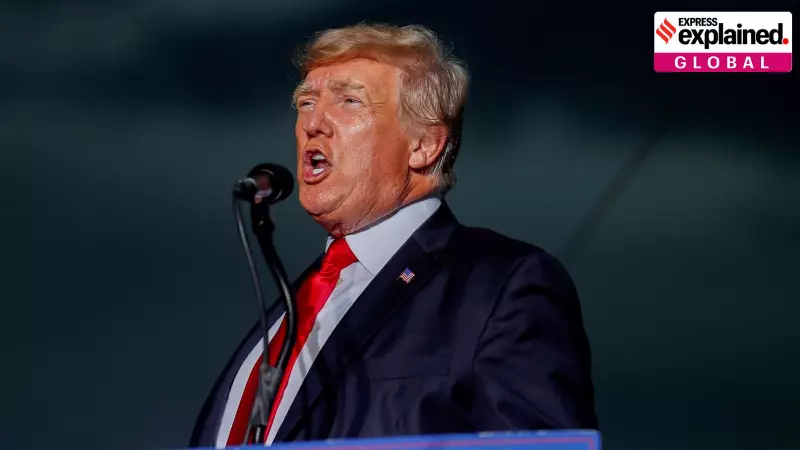
US President Donald Trump's well-documented contempt for climate action has been a driving force behind these exits. Having famously labeled climate change as a 'hoax' and swiftly pulling the nation out of the 2015 Paris Agreement upon his second-term inauguration in January last year, these withdrawals are consistent with his public disdain for institutions promoting climate action and energy transition.
However, the United States has not severed ties with all such organizations. Notably, it exited 31 UN entities but retained membership in the UN Environment Programme (UNEP), which plays a crucial role in global climate policy. Similarly, it withdrew from IRENA but not the International Energy Agency (IEA), and left the IPCC while staying with the World Meteorological Organization (WMO), which hosts the IPCC and contributes to climate science.

Strategic Retention: Serving American Interests
The continued membership in certain bodies does not necessarily indicate a renewed commitment to climate science or action. Instead, it suggests that these organizations still serve specific American interests, as implied by the rationale for leaving others.
Influencing Key Treaty Negotiations
One significant interest is shaping important international agreements currently under discussion. For instance, UNEP has been facilitating talks on a Global Plastics Treaty since 2022, aiming to create a legally-binding instrument to curb plastic pollution. Negotiations stalled last year due to objections from the US and other nations like China, Saudi Arabia, and India over provisions capping plastic production.
As a major plastics producer reliant on fossil fuels, the US seeks to ensure the final agreement does not harm its industry. While it could walk away, an unfavorable treaty might still impact it through import restrictions by other countries. Thus, the Trump administration finds it strategic to remain engaged in these discussions.
A parallel scenario unfolds with shipping emissions talks under the International Maritime Organization (IMO), where the US opposes a proposed carbon tax on ships as part of a net-zero framework for 2050. In both cases, the US position has shifted under the Trump administration, highlighting its focus on protecting economic interests.
Maintaining Dominant Influence
Another reason for retaining membership in certain bodies is the US's dominant influence over their policies and decision-making. Comparing IRENA and IEA illustrates this point. IRENA's core mission to promote renewable energy clashes with the Trump administration's preference for oil and gas, leading to withdrawal. In contrast, the IEA, founded in 1974 to ensure oil supply security, has decision-making power concentrated among about 30 OECD countries, including the US, giving it structural advantage despite recent pushes for sustainable energy.
Similarly, the US has exited lesser-known renewable-focused groups like the Renewable Energy Policy Network for the 21st Century and the 24/7 Carbon-Free Energy Compact, while staying in bodies where it holds sway.
The Case of WMO vs. IPCC
The World Meteorological Organization presents another example. While WMO produces climate science, its primary functions include global weather forecasting, disaster early warning, and atmospheric monitoring. The US agencies like NOAA and NASA, with their satellite systems, are critical to WMO's operations, granting the US significant influence. In contrast, decision-making at the IPCC is more dispersed, making it less appealing for retention.

Conclusion: A Calculated Multilateral Approach
The United States is not abandoning multilateralism entirely; rather, it is selectively disengaging from institutions where it lacks control. By exiting bodies that conflict with its economic and policy priorities while staying in those where it can shape outcomes, the Trump administration is crafting a climate exit strategy that prioritizes American interests above global cooperation. This nuanced approach reveals a deeper calculation behind the high-profile withdrawals, underscoring a preference for influence over isolation in international forums.