US Military Enhances Qatar Air Base Defenses with Mobile Patriot Systems
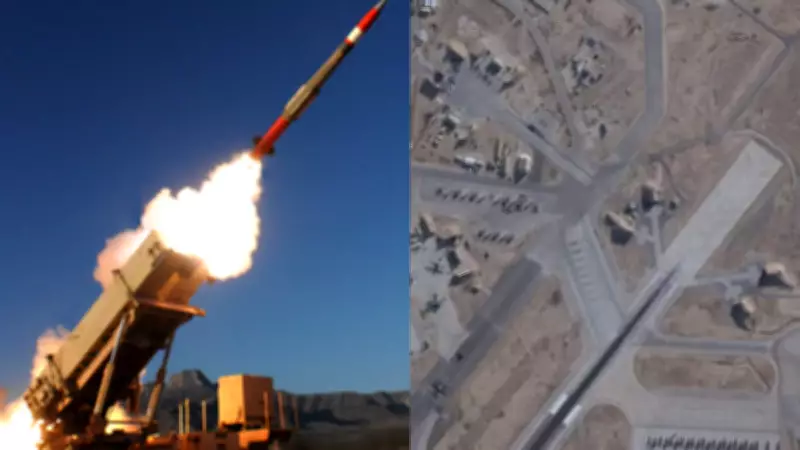
In a significant escalation of defensive preparations, United States forces stationed at Qatar's Al-Udeid air base have loaded Patriot missiles onto mobile truck launchers, according to recent analysis of satellite imagery. This strategic move, observed as tensions with Iran have intensified since January, underscores heightened security concerns in the Middle East.
Heightened Mobility for Rapid Response
The decision to mount the missiles on mobile platforms, specifically M983 Heavy Expanded Mobility Tactical Trucks (HEMTT), rather than semi-static launcher stations, allows for greater flexibility and speed in deployment. William Goodhind, a forensic imagery analyst with Contested Ground, emphasized that this mobility enables the Patriots to be repositioned or moved to alternative sites swiftly in the event of a potential Iranian attack.
Satellite images from early February, when compared with those from January, reveal a notable build-up of military assets across the region. At Al-Udeid, the largest US military facility in the Middle East, up to 10 MIM-104 Patriot air defense systems were observed on HEMTT vehicles at the beginning of February.

Regional Military Build-Up Documented
The imagery analysis provides a detailed snapshot of increased US military presence:
- Al-Udeid, Qatar: Images from February 1 showed an RC-135 reconnaissance aircraft, three C-130 Hercules, 18 KC-135 Stratotankers, and seven C-17 transport planes. This marks a rise from January 17, which had 14 Stratotankers and two C-17s.
- Muwaffaq, Jordan: Satellite images from February 2 displayed 17 F-15E strike aircraft, eight A-10 Thunderbolts, four C-130s, and four unidentified helicopters at one location. A second site showed a C-17, a C-130, and four EA-18G Growler electronic warfare aircraft, whereas images from January 25 had shown no aircraft there.
Iran's Missile Capabilities and Naval Activity
Iran has stated that it has replenished its missile stockpiles following conflicts last summer, when Israel struck its nuclear facilities and other military targets, with the US later joining the campaign. Iran maintains underground missile complexes near Tehran, Kermanshah, Semnan, and along the Gulf coast.
Additionally, satellite images captured the Iranian naval drone carrier IRIS Shahid Bagheri at sea about 5 km off Bandar Abbas on January 27, and again near the port on February 10, indicating ongoing naval operations.
Understanding Patriot Air Defense Systems
The Phased Array Tracking Radar to Intercept on Target, or Patriot (MIM-104), is a long-range air defense system produced by Raytheon and Lockheed Martin Missiles and Fire Control in the United States. Designed to counter tactical ballistic missiles, cruise missiles, and aircraft, it is used by the US and allied countries including Germany, Israel, Japan, and Qatar.
Historically, US forces deployed Patriot systems during the 2003 Iraq conflict, stationing them in Kuwait to intercept surface-to-surface missiles. In October 2019, the US Department of Defense approved deploying additional forces, including two Patriot missile batteries and a Terminal High Altitude Area Defense (THAAD) system, to Saudi Arabia following drone attacks on oil facilities.
This analysis highlights the ongoing strategic adjustments in US military posture in response to regional threats, with mobile Patriot systems serving as a key component in enhancing defensive readiness.