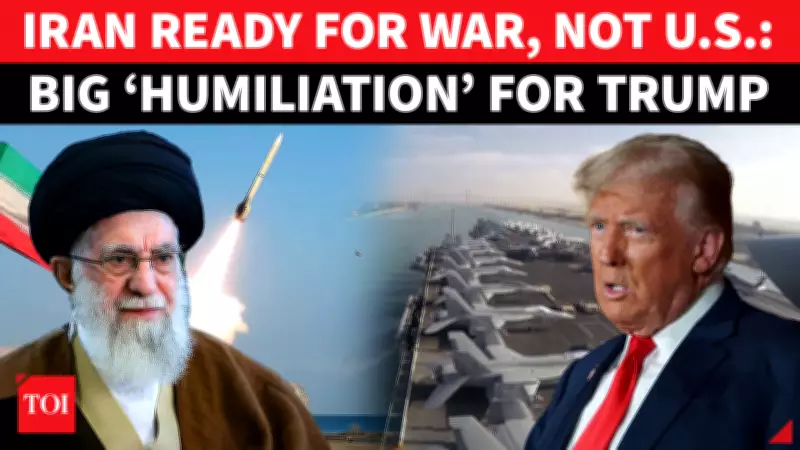
US Military Capability Gaps Delay Potential Iran Strike Decision
The United States military establishment currently lacks the operational readiness required to initiate military strikes against Iran, according to confidential sources cited by the Wall Street Journal. This assessment comes despite the deployment of significant naval assets to the region, including the aircraft carrier USS Abraham Lincoln leading what has been described as a "massive armada" of American forces.
Defensive Posture Takes Priority Over Offensive Action
Washington's current strategic focus appears centered on ensuring comprehensive protection for key regional allies and American personnel rather than preparing for immediate offensive operations. The Pentagon is reportedly accelerating the deployment of advanced missile defense systems across strategic locations in the Middle East, including both THAAD (Terminal High Altitude Area Defense) and Patriot missile batteries.
This defensive buildup aims to create layered protection for several critical assets:

- Israeli territory and military installations
- Gulf Cooperation Council allied nations
- Forward-deployed United States troops and bases
- Vital regional infrastructure and shipping lanes
Iranian Leadership Issues Stark Warning
Iran's Supreme Leader Ayatollah Ali Khamenei has issued a stern warning that any military action against Iranian interests would likely trigger a broader regional conflict. This statement underscores the delicate balance of power in the Middle East and the potential for escalation beyond bilateral confrontation.
Meanwhile, former President Donald Trump has maintained diplomatic channels remain open, suggesting continued preference for negotiation over military confrontation. This position creates an interesting dynamic where military preparations continue alongside diplomatic overtures.
International Diplomatic Efforts Continue
Parallel to military preparations, diplomatic discussions with Russia are reportedly ongoing, with Moscow urging restraint from all parties involved. These talks highlight the international dimension of the Iran-U.S. standoff and the potential for great power involvement in regional disputes.
The current situation represents a complex interplay of military deterrence, diplomatic maneuvering, and strategic calculation. The Pentagon's apparent reluctance to push the strike button despite significant force deployment suggests several possible interpretations:
- Genuine capability gaps in regional defense systems
- Strategic caution about triggering wider conflict
- Preference for diplomatic resolution despite military posturing
- Concerns about operational readiness for sustained conflict
This standoff continues to evolve as both sides navigate the tense balance between demonstrating resolve and avoiding escalation. The coming weeks will likely reveal whether current military preparations represent genuine preparation for conflict or sophisticated forms of coercive diplomacy.