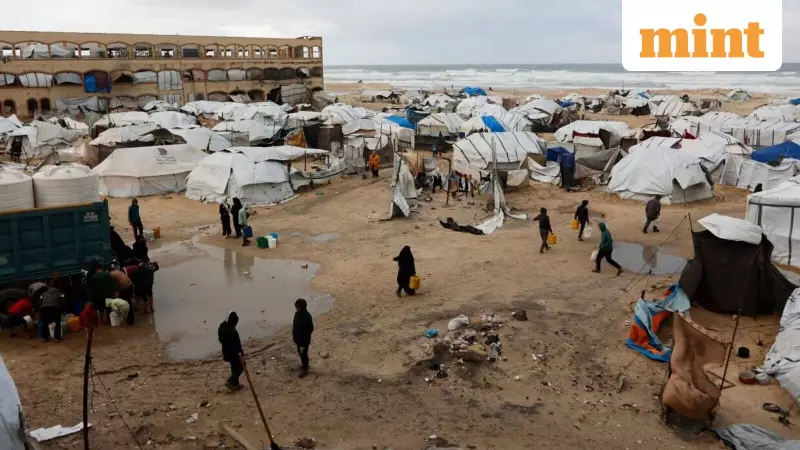
The Trump administration is set to announce a significant step in its Gaza plan this Wednesday. U.S. officials confirm that a committee of Palestinian technocrats will be named to temporarily run the bombed-out enclave. This move marks a shift from conflict cessation to governance and rebuilding, labeled as Phase 2 of a broader 20-point blueprint.
Moving Forward with Governance
Since a fragile ceasefire holds in Gaza and Hamas has returned nearly all hostages, U.S. officials believe the time is right to focus on reconstruction. The plan involves establishing the National Committee for the Administration of Gaza, or NCAG. This group of 15 technocrats will handle everyday management tasks such as sanitation, utilities, and education.
Leadership and Oversight
Nickolay Mladenov, a former U.N. envoy for Middle East peace and Bulgarian foreign minister, will be appointed as the new high representative. He will oversee the implementation of the peace plan under the Trump-chaired Board of Peace. Mladenov will act as a conduit between the Palestinian panel and the Board, which will provide high-level direction on Gaza matters.

President Trump mentioned that the Board will include the most important leaders from key nations, though specific members remain unnamed. The administration aims to transform Gaza from post-war rubble into a safe, high-tech region in the Middle East. Steve Witkoff and Jared Kushner led the development of this ambitious plan.
Challenges and Skepticism
Despite progress, the plan faces deep skepticism from senior Middle Eastern officials. A major concern is that Hamas, designated a terrorist group by the U.S., has not detailed how it plans to disarm under the ceasefire terms brokered last October. This lack of disarmament could imperil reconstruction and governance efforts.
Dan Shapiro, a former U.S. ambassador to Israel, expressed concerns. He noted that Hamas has proven resilient and might cling to power, posing ongoing threats and potentially leading to future conflicts. The Israeli government also insists that the plan cannot advance until the body of Ran Gvili, a police officer killed in the 2023 attacks, is returned.
International Involvement
The administration has yet to announce details about an International Stabilization Force, or ISF, to maintain order in Gaza. Indonesia and Morocco have committed troops, but many countries are hesitant to participate in forcibly disarming Hamas. This complicates efforts to establish the force, which is crucial for the plan's success.
U.S. officials stress that the plan's success depends on Hamas laying down arms and ceding control. While Hamas has been largely decimated, it remains a threat to both Palestinians and Israel. However, the administration expects Hamas to eventually lose power, allowing a new governing structure to emerge. Hamas has stated it will dissolve its existing government once the technocratic group is in place.
Broader Implications
Throughout the war, Israel has deferred the question of Gaza's governance, suggesting international forces should take over. Prime Minister Benjamin Netanyahu opposes the Palestinian Authority governing Gaza, aligning with Israel's stance against a Palestinian state. This adds another layer of complexity to the U.S.-led initiative.
The long-awaited announcement reflects a bold attempt to bring lasting peace to Gaza. Yet, with Hamas's disarmament unresolved and international troops hesitant, significant hurdles remain. The coming weeks will be critical in determining whether this governance plan can pave the way for stability in the region.