US Transfers IS Detainees Amid Escalating Syria Violence: Expert Analysis
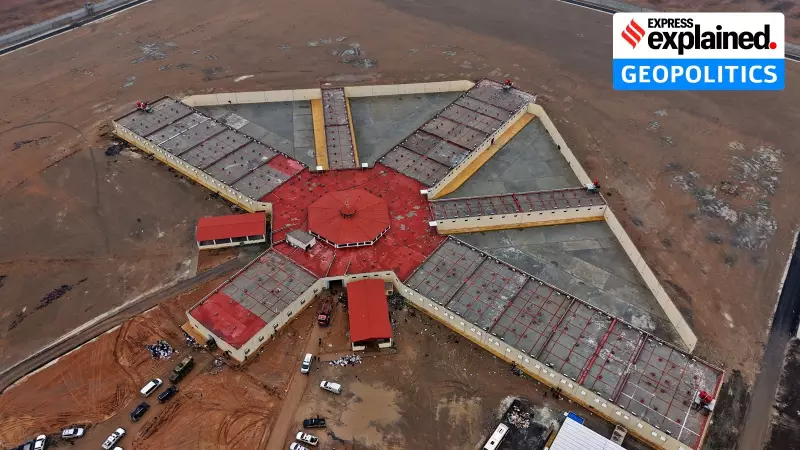
As the United States Central Command (CENTCOM) orders the transfer of up to 7,000 Islamic State (IS) detainees from Syria to Iraq, renewed violence threatens stability in a country barely emerging from over a decade of civil war. This strategic move comes amid heightened fighting between Syrian government forces and Kurdish-led groups, with at least 100 detainees already escaping during recent clashes.
Ceasefire Extension Amid Volatile Security Situation
Parts of Syria have witnessed intensified combat operations, prompting the Syrian government and Kurdish forces to extend a ceasefire for another 15 days starting January 24, 2026. The fragile truce follows government troops taking control of the al-Aqtan prison in Raqqa from the Kurdish-led Syrian Democratic Forces (SDF), highlighting the precarious security landscape in northeastern Syria.
Professor A K Ramakrishnan, a retired expert from Jawaharlal Nehru University's Centre for West Asian Studies, provides crucial context about the key players and their evolving motivations in this complex conflict.

The Kurdish Question: Historical Context and US Alignment
The Kurds represent one of the world's largest ethnic groups without a sovereign state, dispersed across Turkey, Iraq, Iran, and Syria. In Syria specifically, Kurds constitute approximately 8.5 to 10% of the population but faced systematic discrimination during the Ba'athist regimes of Hafiz al-Assad and his son Bashar al-Assad.
During the Syrian civil war, Kurdish forces established the autonomous region of Rojava in northern and eastern Syria, developing decentralized governing institutions with progressive elements like women's equality measures. The Democratic Autonomous Administration of North and East Syria (DAANES) emerged as the current Kurdish-led multi-ethnic autonomous system, with the Syrian Democratic Forces (SDF) serving as its armed wing.
The United States provided substantial support to Kurdish autonomy during the 2010s fight against Islamic State forces, with the SDF playing an integral role in territorially defeating IS by 2019.
Current Triggers: Integration Disputes and Strategic Retreats
The post-Assad transitional government under President Ahmad al-Sharaa has been attempting to consolidate power by integrating various ethnic groups and military forces. A March 2025 agreement between al-Sharaa and SDF commander Mazloum Abdi stipulated integration of SDF-controlled institutions into the Syrian state apparatus, but disputes over implementation modalities created tensions.
Recent developments have seen government forces advance into Raqqa and Deir al-Zor, seizing control from the SDF who have retreated from much of their non-Kurdish territories. The government offered a four-day consultation window through a ceasefire agreement effective January 20, 2026, pausing advancement toward major Kurdish cities like Hasakah and Qamishli.
Shifting US Policy and Regional Implications
US President Donald Trump's characterization of Syrian President Ahmad al-Sharaa as a "tough guy" who was "working very hard" signals a notable policy shift. The US envoy to Syria, Tom Barrack, has explicitly stated that the SDF's original purpose has "largely expired" and that Kurdish forces are no longer essential for American interests in the region.
This represents a significant departure from previous US-SDF alignment and indicates Washington's support for the al-Sharaa government's efforts to establish control over Kurdish areas. The US is particularly concerned about IS fighters escaping detention facilities amid the conflict, prompting the detainee transfer initiative to Iraq.
Government Outreach and Kurdish Recognition
While advancing militarily, the Syrian government has simultaneously attempted to address long-standing Kurdish grievances through political measures. President al-Sharaa's Decree No. 13, issued on January 16, represents a milestone by recognizing Kurdish cultural and linguistic identity, declaring Kurdish a national language, and granting citizenship to stateless Kurds.

However, the decree explicitly rejects Kurdish political autonomy, creating a complex dynamic where military pressure coexists with cultural recognition. Whether this dual approach will yield stability remains uncertain.
Regional Reactions and Broader Implications
Turkey, a US ally with its own Kurdish population concerns, has welcomed the shift away from US-SDF alignment, having previously considered it an irritant in bilateral relations. Across West Asia, governments with significant Kurdish populations generally discourage Kurdish autonomy movements, despite its reality in northern Iraq.
The advancement of Syrian government forces into Kurdish autonomous areas has created a volatile security situation with potential ripple effects throughout the region. As the US recalibrates its Middle East strategy, the handling of IS detainees and evolving Kurdish relations will significantly impact regional stability and counterterrorism efforts.
The extended ceasefire provides a temporary respite, but whether it leads to lasting peace or precedes renewed offensive operations remains the critical question facing Syria's fragile post-conflict landscape.