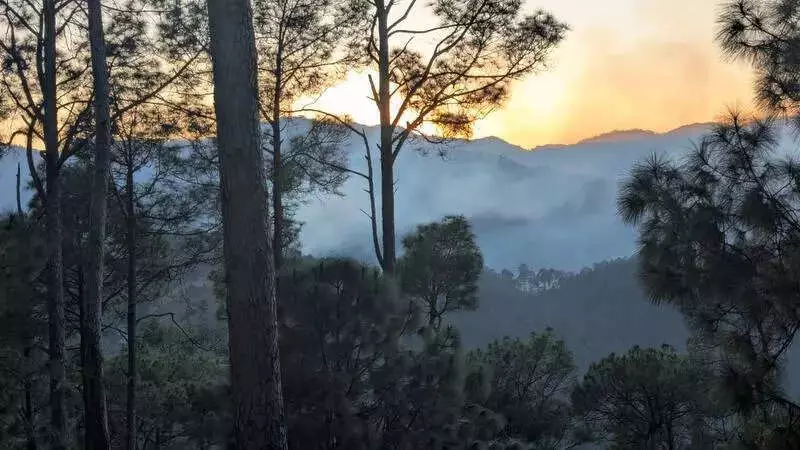
Uttarakhand has emerged as the state with the highest number of winter forest fire alerts in India this season, sounding alarms over long-term ecological damage in the fragile Himalayan region. According to data from the Forest Survey of India (FSI), the state has received approximately 1,900 alerts since the winter wildfire period began in November.
National Crisis and Regional Impact
Other states reporting significant numbers include Madhya Pradesh with 940 alerts, Maharashtra with 883, Chhattisgarh with 822, and Karnataka with 544. However, the situation in Uttarakhand's hill districts is particularly severe. Residents in Chamoli, Uttarkashi, Nainital, Almora, Pauri, and Tehri have reported thick plumes of smoke from wildfires drifting into settlements, choking the air and drastically reducing visibility.
The fires have not only polluted the air but also disrupted wildlife patterns. Locals have flagged a noticeable increase in cases of wild animals straying closer to human habitats, a phenomenon they directly attribute to the fire disturbances and dense smoke within their forest habitats.

Official Response and Community Action
Uttarakhand's Forest Minister, Subodh Uniyal, addressed the situation, noting that of the total FSI alerts, around 20% could be in reserved forest areas, while an estimated 40% are of a non-serious nature. Emphasizing the need for collective effort, Uniyal stated, "We need community participation to mitigate disasters."
The state's strategy involves aligning field forest teams with villagers through Forest Fire Management Committees (FFMCs), which are headed by village heads (gram pradhans). Each committee has been allocated Rs 30,000 to combat the blazes. Despite these measures, the persistence of fires amid cold weather has alarmed both officials and residents.
Health Hazards and Livelihood Loss
The consequences on the ground are dire. In Uttarkashi, where fires burn in the Mukhem, Dunda, and Dharasu forest ranges, the smoke is causing widespread health issues. Shyam Kothiyal, a 53-year-old resident from Dunda, reported an increase in eye irritation, breathing difficulties, frequent coughing, and headaches. "Asthma patients and those with respiratory illnesses are particularly affected," he said.
In Bageshwar district, extensive fires in Garur, Bageshwar, and Kanda have reduced lush forests to ashes, creating an acute shortage of fodder for livestock-dependent communities. Gopal Pandey, a local resident, lamented, "All the surrounding forests got burnt. We are being forced to feed our cattle dry grass now." Fire service officer Gopal Rawat from Bageshwar confirmed his teams have responded to seven fire incidents since October.
The ecological disturbance is pushing wildlife into villages. Kanta Devi, a 70-year-old from Bageshwar, pointed out that wild animals sneaking into villages after sunset for food has become common. In a stark example, a leopard killed six milch cows in the Chaukhutia and Dwarahat areas in just three days.
The situation remains grim in neighbouring Almora district, where a forest fire in the Kathpudhiya beat of the Almora range damaged almost one hectare of reserved forest land just this Wednesday.
A Changing Climate and Intensified Monitoring
Interestingly, the state forest department's own portal records only 19 forest fire incidents from November 1 to December 14, with 18 occurring in reserved forests. This discrepancy with FSI data highlights the challenge of tracking all incidents. Field forest staff acknowledge that monitoring has been intensified because winter fires, once a rarity, are becoming more frequent.
Officials and experts attribute this alarming new normal to prolonged dry spells and changing climatic conditions in the region. The combination of these factors is turning the Himalayan winter into a season of smoke and fire, threatening both the environment and the well-being of its inhabitants.