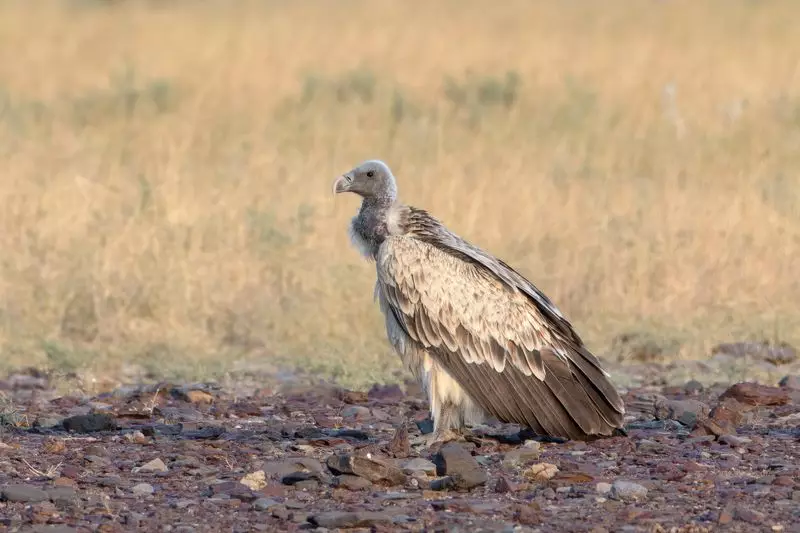
In a remarkable display of endurance and navigation, a critically endangered white-rumped vulture has completed an astonishing 750-kilometer flight from the heart of India to the western state of Maharashtra. The bird's epic 17-day journey, meticulously tracked via satellite, has provided wildlife researchers with invaluable data and a renewed sense of wonder.
The Beginning of an Epic Journey
The story begins at the Pench Tiger Reserve in Madhya Pradesh. Here, on February 26, 2024, a team of dedicated conservationists from the Bombay Natural History Society (BNHS) released this particular vulture back into the wild. The bird was not an ordinary one; it was part of a crucial vulture conservation breeding and release program aimed at reviving the decimated populations of these vital scavengers.
Before its release, the vulture was fitted with a Platform Terminal Transmitter (PTT) tag. This sophisticated satellite tracking device, weighing a mere 30 grams, was the key to unlocking the secrets of its movements. The tagging initiative is a collaborative effort involving the BNHS, the Madhya Pradesh Forest Department, and the International Union for Conservation of Nature (IUCN), with critical funding from the Royal Society for the Protection of Birds (RSPB) in the UK.

The 750-Kilometer Flight Path
After its release, the vulture did not linger for long. It embarked on a westward journey that would captivate the scientists monitoring its signal. The data revealed a flight path traversing multiple districts and even crossing state borders.
The bird first moved towards Chhindwara, then continued its flight over Betul and Hoshangabad districts. Its trajectory showed a clear movement towards Maharashtra. The vulture's long flight culminated when it reached the Trimbakeshwar area of Nashik district on March 13, 2024. The straight-line distance covered was an impressive 750 kilometers, accomplished in just over two weeks.
This journey is particularly significant because it marks one of the longest movements ever recorded for a vulture released under this conservation program. It offers concrete proof that these birds are capable of dispersing over vast distances, a behavior critical for genetic diversity and recolonizing old habitats.
Implications for Vulture Conservation in India
The successful tracking of this flight is more than just an interesting anecdote; it is a major milestone for conservation science. Dr. Vibhu Prakash, the principal scientist and deputy director of BNHS, emphasized the importance of this data. He stated that understanding the post-release dispersal patterns of these captive-bred vultures is fundamental to the program's long-term success.
The dramatic decline of vulture populations in the Indian subcontinent, primarily due to the veterinary drug diclofenac causing kidney failure, is one of the most severe avian conservation crises in history. The BNHS-led program has been a beacon of hope, breeding vultures in safe environments and reintroducing them into the wild.
This 750-km journey provides several key insights:
- Dispersal Capability: It confirms that released vultures can travel far, potentially connecting with other populations.
- Habitat Exploration: The movement indicates the birds are actively exploring landscapes, which is essential for finding safe food sources and nesting sites.
- Technology Validation: It proves the effectiveness of satellite tagging in monitoring these critically endangered species.
The forest officials and researchers involved are now closely watching the vulture's behavior in its new location near Nashik. The hope is that it will find a suitable habitat, locate safe food (from carcasses not treated with toxic drugs), and eventually join or start a new breeding population. This single flight is a powerful testament to the resilience of nature and the impact of sustained, science-based conservation efforts.