Wadhwana Lake's Migratory Bird Population Plummets by 50% Since Ramsar Designation
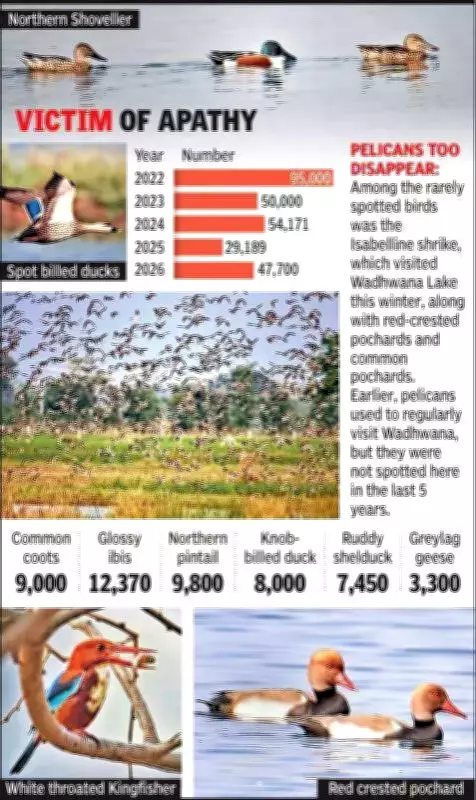
The once vibrant symphony of migratory birds at Vadodara's Wadhwana Lake has been replaced by an unsettling quiet. Recent data from the forest department's annual bird count reveals a startling decline, with only around 47,700 birds recorded this season. This figure represents a dramatic drop of nearly 50% compared to the 95,000 birds counted in 2022, just one year after the wetland received the prestigious Ramsar site designation for its international importance.
Forest Officials Express Deep Concern Over Declining Numbers
Senior forest authorities have voiced serious apprehension regarding these alarming statistics. Anshuman Sharma, Conservator of Forests for the Vadodara circle, explained the primary issue: "The reduced bird count is significantly linked to the fluctuating water levels in Wadhwana. The lake is managed by the irrigation department, which maintains specific water levels to support agricultural needs, often keeping the water too high for many bird species."
Sharma elaborated that numerous migratory birds, particularly waders, require shallow waters for effective foraging. The consistently high water levels at Wadhwana create an unsuitable environment, forcing these species to seek alternative wetlands. The forest department is actively analyzing these water level variations and developing strategic plans to make the lake more attractive to avian visitors in future migration seasons.

Three-Phase Bird Count Reveals Water Level Impact
The forest department conducted this year's bird census in three distinct phases over the past three months. Observations showed consistently low numbers during the first two phases, but a noticeable increase occurred during the third phase conducted on Tuesday, coinciding with a natural reduction in water levels. This correlation prompted the forest department to formally request the irrigation department to maintain more stable, specifically lower water levels during the critical winter months when thousands of migratory birds traditionally visit the lake.
A forest official highlighted the ecological chain reaction: "Fluctuating water levels severely impact aquatic plant growth. Sudden drops cause plants to wither and die, while excessive water stunts their development. Without abundant aquatic vegetation, birds lack sufficient food sources, making the habitat less desirable."
Specific Challenges for Different Bird Species
The water management issues affect various bird groups differently:
- Wader birds require extensive swampy or shallow marshy areas to hunt for food effectively.
- Ducks cannot dive to sufficient depths to reach aquatic plants if water levels remain excessively high.
Additionally, environmental officials suspect that inflows from the Narmada River might be altering the water's chemical composition, potentially affecting the health and growth of crucial aquatic plants that form the base of the wetland's food web.
The forest department remains committed to implementing solutions that balance agricultural water needs with ecological requirements, hoping to restore Wadhwana Lake as a thriving sanctuary for migratory birds and preserve its status as an internationally recognized Ramsar wetland site.