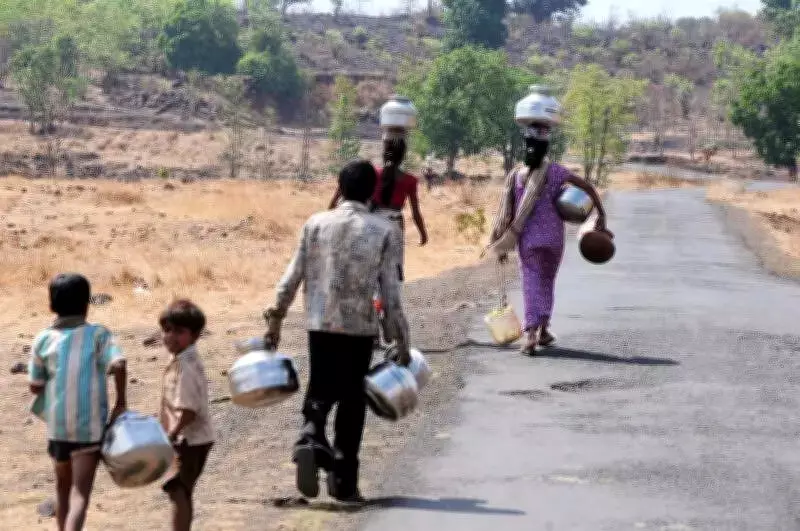
Nearly 89,000 people across non-urban areas of Pune district are currently dependent on water tankers, despite a satisfactory monsoon last year. This highlights a worsening rural water crisis as summer reaches its peak.
Scope of the Crisis
According to data from the Zilla Parishad (ZP) administration, tankers supply drinking water to 256 hamlets across 50 villages in the tehsils of Purandar, Bhor, Haveli, Khed, Ambegaon, Junnar, and Shirur. Ambegaon has emerged as the worst-affected region, followed by Junnar and Khed, where groundwater levels have plummeted due to soaring temperatures and depleting natural sources.
Current Measures
Officials stated that 50 tankers, comprising both government and private vehicles, are currently operational. To address the recurring issue, the administration has drafted a long-term mitigation plan involving more than 3,300 water conservation and supply projects across 376 villages, with an estimated budget of Rs 35 crore.

"The crisis is most acute in villages where Jal Jeevan Mission projects are yet to be completed," said Amit Patharwat, executive engineer of the ZP's rural water supply department. "While the number of tankers required is currently lower than at this time last year, we have already initiated measures such as installing more hand pumps and repairing existing infrastructure."
Impact on Residents
For villagers in Ambegaon, the situation has deteriorated rapidly over the last few weeks as wells and borewells have run dry. "We had good rainfall during the monsoon last year, but by April, our local sources failed. Tankers are now our only lifeline," said Baban Shinde, a local farmer.
The shortage has placed a heavy burden on homemakers, who often wait hours for supply. "The tanker usually arrives once every two days. We store as much as possible in drums and utensils because there is no certainty about when the next one will come," said Sunita Jagtap, a resident of a hamlet in Junnar.
Economic Fallout
The crisis is also crippling the rural economy. Ganesh Pawar, a dairy farmer from Khed, noted that while families manage their own needs, sustaining livestock has become nearly impossible. "Fodder is already expensive, and now this water scarcity is adding to our misery," he said.
Long-Term Solutions and Criticism
While the ZP administration is focusing on desilting, source strengthening, and pipeline repairs, activists argue that these are "band-aid" solutions. They pointed to a lack of focus on rainwater harvesting and groundwater management.
"Every summer, these regions face tanker dependency regardless of the previous year's rainfall. Unless watershed management and groundwater recharge are prioritized consistently, the suffering will continue," said tribal activist Bhudaji Damse. He called the recurring shortage a "failure of the system", questioning why regions with high annual rainfall still face summer droughts.
Digamber Bhalchim, former sarpanch of Malin village, added that many residents still walk kilometres to fetch water from natural springs. "It is a sad reality that we have been requesting the administration to end this ordeal for years, but in vain," he said.
Administration's Appeal
The district administration has appealed to citizens to use water judiciously as they brace for a potentially extended dry spell before the arrival of the monsoon.