

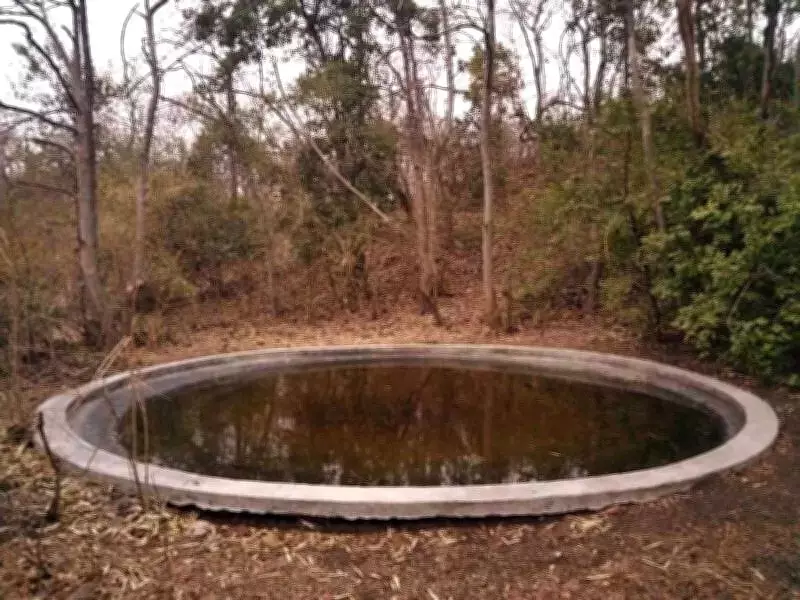
Marathwada Wildlife Sanctuaries Face Critical Water Shortage as Summer Intensifies
With summer temperatures already climbing above normal levels in Chhatrapati Sambhajinagar, nature lovers and conservationists are raising urgent calls for the recharging of water holes across various wildlife sanctuaries in the Marathwada region. The survival of numerous wild creatures depends on these artificial water bodies during the harsh dry season.
Temperature Spike Highlights Growing Concern
On Monday, Chhatrapati Sambhajinagar recorded a maximum temperature of 34.6°C, which was nearly two units above the normal range for this time of year. This early heatwave has accelerated the drying of natural water sources, making the maintenance of artificial water holes critically important.
Key Sanctuaries at Risk
The region's important wildlife sanctuaries include Gautala Autramghat wildlife sanctuary spanning Chhatrapati Sambhajinagar and Jalgaon district, Yedshi Ramling Ghat wildlife sanctuary in Dharashiv district, and Naigaon Peacock Sanctuary in Beed district. These protected areas host diverse wildlife populations that rely on maintained water sources.

Conservationist Sounds Alarm
Prominent conservationist Kishor Pathak emphasized the life-or-death importance of these water holes during summer months. "Water holes represent the only reliable source of water for wild creatures once natural bodies begin drying from early February onward," Pathak explained. "These artificial reservoirs require regular cleaning and refilling. Without official attention and maintenance, we could witness tragic animal fatalities."
Scale of the Challenge
Gautala Autramghat wildlife sanctuary alone contains approximately 46 water holes that various wild animals frequent regularly. While the exact total number of water holes across all Marathwada sanctuaries remains unconfirmed, the scale of maintenance required is substantial and growing more urgent with each passing day of rising temperatures.
Forest Department Responds
Deputy Conservator of Forest (Wildlife) Revati Kulkarni confirmed that instructions have been issued to local staff to ensure sufficient water availability across all sanctuary water holes. "Our field personnel have received directives to perform regular cleaning and recharging operations," Kulkarni stated. "We're utilizing water tankers and other arrangements to maintain these vital artificial water bodies for wildlife sustenance."
The forest department's response comes as conservationists warn that timely intervention could mean the difference between survival and tragedy for Marathwada's wildlife populations. With summer just beginning and temperatures expected to rise further, the regular maintenance cycle for these water holes becomes increasingly crucial for regional biodiversity conservation.






