

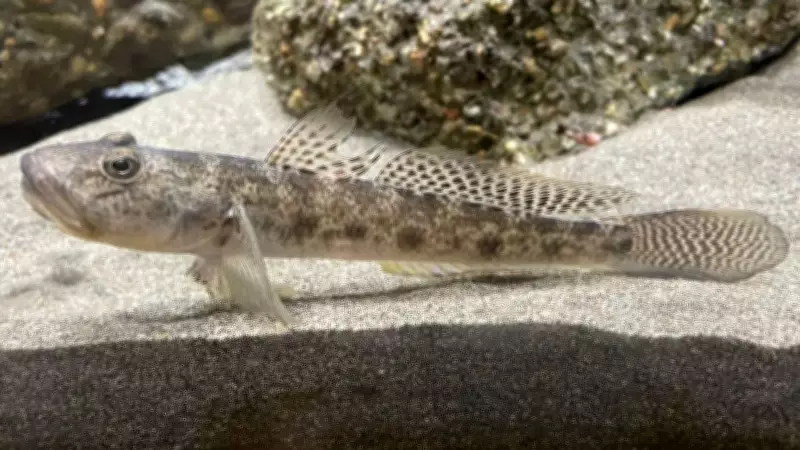
Nature's Incredible Climbers: The Waterfall-Climbing Goby Fish
In the fast-flowing rivers and steep tropical landscapes of regions like Hawaii, Asia, and South America, a remarkable natural phenomenon occurs. Certain species of fish, most notably the goby fish such as Sicyopterus stimpsoni, perform an astonishing feat by climbing waterfalls. This incredible ability is not just a curious talent but a vital survival strategy, allowing these small fish to reach safe habitats, evade predators, and complete their life cycles in some of the world's most challenging environments.
What Is a Waterfall-Climbing Fish?
Waterfall-climbing fish are species capable of ascending near-vertical rock faces under the force of flowing water. While gobies and hillstream loaches are the most commonly observed examples, the Sicyopterus stimpsoni stands out as a particularly well-studied case. These fish do not swim in the traditional sense; instead, they employ a unique inching motion, using cycles of attachment and detachment to move upward against gravity and strong water currents. Research from the National Oceanic and Atmospheric Administration (NOAA) highlights that Hawaiian gobies like Sicyopterus stimpsoni have evolved specific adaptations for this climbing behavior as an integral part of their life cycle.
How the Fish Manages to Climb
The goby's climbing prowess is enabled by a suite of specialized physical adaptations. Key among these is the suction power generated by their pelvic fins, which allows them to adhere securely to wet and slippery rocks. Some goby species have taken this adaptation further by utilizing their mouths as secondary suction devices. These fish move in a slow, step-like manner, alternately clinging with their mouths and bodies. In contrast, other gobies employ a rapid movement style, using their fins and tails to propel themselves upward in stages. These diverse strategies demonstrate how different goby species have developed unique solutions to overcome the formidable challenge of climbing rocks.

How Many Fish Survive the Journey?
Climbing waterfalls is an arduous and perilous endeavor, with not all fish succeeding in the journey. Studies indicate that only a small percentage of juvenile gobies manage to complete the entire upstream climb. Many are swept away by powerful currents or dislodged during the ascent, making this one of the most demanding survival challenges in the animal kingdom. Despite these odds, enough individuals succeed to sustain the species. Research on goby populations reveals that this high-risk migration is a critical component of their amphidromous life cycle, where survival hinges on reaching upstream habitats for feeding and breeding.
What Lies Beneath the Water
The environment in which these fish live is as crucial as their climbing abilities. Freshwater and mountain pools serve as essential sites for feeding and breeding, requiring a delicate ecological balance. The presence of climbing fish often signals a healthy environment, as they thrive only in clean, well-oxygenated waters. This interdependence underscores the importance of preserving natural waterways to support such unique behaviors.
Other Fish That Show Similar Behavior
While gobies are the most renowned waterfall climbers, they are not alone in this ability. Recent observations have documented certain species of catfish also climbing wet surfaces near waterfalls. These catfish use their fins and body pressure to ascend, proving that multiple fish lineages have independently evolved climbing capabilities, highlighting the versatility of aquatic adaptation.
Why This Behavior Matters
The ability of fish to climb waterfalls extends beyond mere fascination; it has significant implications for evolutionary biology and technological innovation. Scientists study this behavior to understand how animals overcome physical barriers, inspiring the development of new technologies, such as improved suction devices based on natural designs. Moreover, this climbing behavior emphasizes the need to conserve natural waterways. Artificial structures like dams and waterfalls can act as barriers to fish migration, disrupting access to breeding grounds and threatening species survival.






