West Bengal Child Rights Commission Develops Climate Education Projects for Schools
The West Bengal Commission for Protection of Child Rights (WBCPCR) has taken a significant step toward integrating climate education into school curricula by developing a comprehensive booklet of climate change-related projects. This initiative aims to engage children through practical, hands-on learning experiences that equip them with essential knowledge, skills, and values to act responsibly, protect themselves, and contribute meaningfully to overcoming climate challenges.
Projects Forwarded for Textbook Inclusion
The commission has formally forwarded the detailed booklet to the school syllabus committee for potential inclusion of these innovative projects in textbooks. The projects are designed to make climate education interactive and relevant to students' lives, covering a wide range of environmental issues through creative activities.
The comprehensive project list includes:

- Landslide and avalanche awareness through diorama projects
- Poster design focusing on climate change impacts on local ecosystems and wildlife
- Creation of comic strips addressing deforestation and climate hazards
- Educational posters highlighting floods and associated child rights violations
- River journey mapping projects to study riverbank erosion
- DIY rainwater harvesting model construction
- Photo essays documenting mining activities and children's health hazards
- Creative writing exercises exploring deforestation and climate change themes
- Disaster kit preparation for floods or cyclones
- Cool-my-school campaigns to mitigate urban climate change effects
Additional Resources and Collaborative Development
Beyond the primary project booklet, WBCPCR has created two additional booklets specifically addressing climate change and disaster management challenges faced by children. These resources include a white paper containing detailed recommendations to make the state's disaster management policy and framework more sensitive to children's unique needs. The white paper emphasizes building community resilience to climate change through child-centric disaster management approaches.
All projects and the accompanying white paper were developed in close collaboration with Terre des Hommes (TDH) and Praajak, two organizations with expertise in child rights and environmental advocacy. This partnership ensures the materials are both educationally sound and practically applicable in real-world scenarios.
Climate Change as a Child Rights Crisis
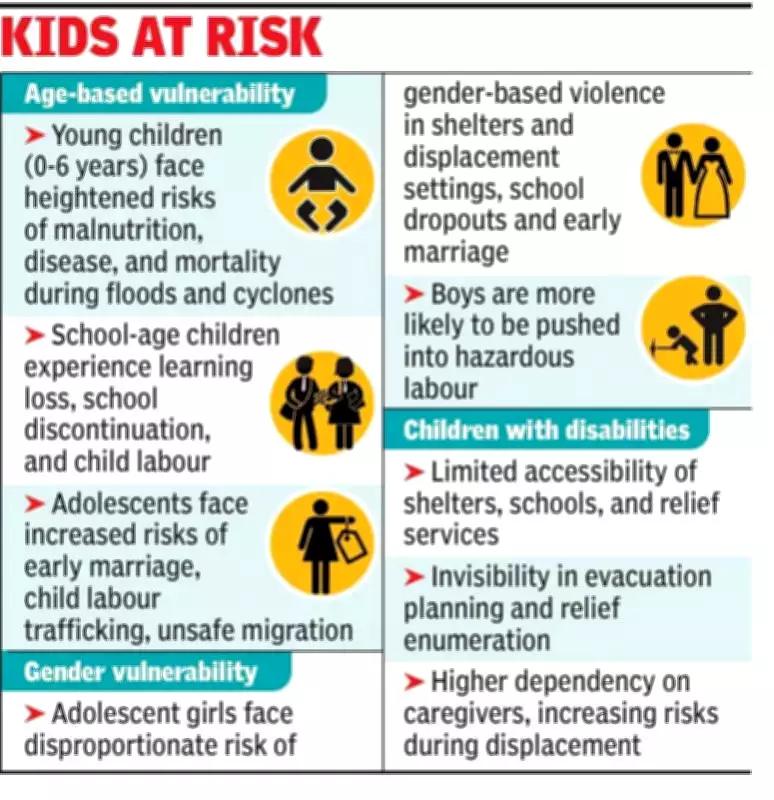
WBCPCR Chairperson Tulika Das explained the commission's motivation, stating, "In recent years, we have recognized an inseparable reality: the climate change crisis is fundamentally a child rights crisis. Children are disproportionately vulnerable to the floods, cyclones, and heatwaves that increasingly threaten our region. The Commission emphasizes that disaster response must be child-centric, inclusive, and equitable. We must prioritize those in environmentally fragile areas, especially children facing displacement, poverty, or disability."
The commission has called for establishing a special unit dedicated to developing risk training and disaster-related information specifically tailored for students. This proposed unit would design comprehensive training modules aimed at educating students about disaster preparedness, response, and recovery, ensuring they acquire the knowledge and skills necessary to contribute effectively during emergencies.
Repositioning Children in Climate Governance
WBCPCR Advisor Ananya Chatterjee Chakraborti outlined the broader vision behind these initiatives, stating, "Our goal is to reposition children at the heart of climate-resilient governance, ensuring their meaningful participation in preparedness, recovery, and climate action. By empowering children with practical knowledge and involving them directly in climate solutions, we create more resilient communities and foster a generation capable of addressing environmental challenges."

This comprehensive approach represents a significant advancement in climate education, moving beyond theoretical knowledge to practical application and skill development. By integrating these projects into school curricula, West Bengal aims to create a generation of environmentally conscious citizens equipped to address the complex challenges of climate change through informed action and community engagement.