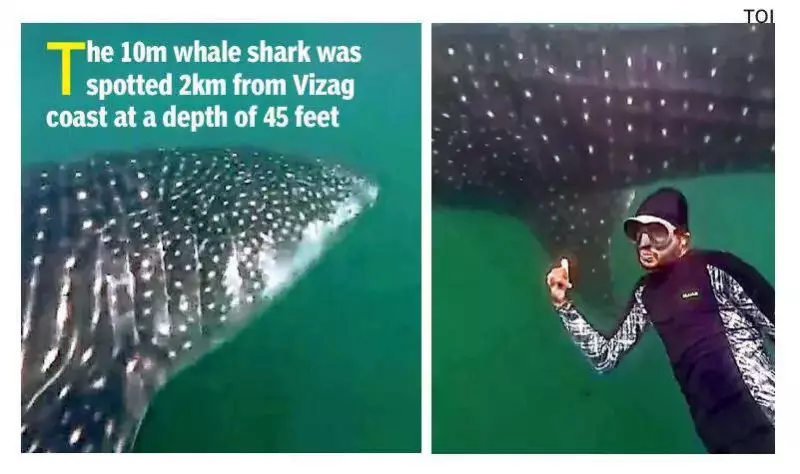
Rare Whale Shark Sighting Delights Scuba Divers Near Visakhapatnam Coastline
In an extraordinary marine encounter that has captivated the diving community, experienced scuba instructors from Dive Adda discovered a magnificent whale shark swimming near Chinna Rushikonda along the Visakhapatnam shoreline on January 18. This remarkable sighting represents one of the most incredible underwater experiences ever documented in this coastal region, offering a rare glimpse into the rich marine biodiversity of Vizag's waters.
An Unforgettable Underwater Experience
The diving team, consisting of instructors Bhadram Rasamsetty, Vyshak, Bobas Baby, and Vyshnav, made this incredible discovery while returning from a regular training dive in the Bay of Bengal with two students. According to their detailed account, the whale shark measured approximately 10 metres in length and was observed following schools of fish from a distance of about 100 metres between the shoreline and deeper waters.
What made this encounter particularly special was the shark's behavior – the massive marine creature showed no signs of disturbance from the divers' presence, allowing them to observe it for a full five minutes at a safe distance before it gracefully moved into the deeper ocean. The divers maintained a respectful distance at a depth of around 4 metres, ensuring neither their safety nor the shark's natural behavior was compromised.

First Close-Range Observation in Vizag Waters
Bhadram Rasamsetty, founder of Dive Adda and a former naval officer with 15 years of service, emphasized the historical significance of this sighting. "This marks the first time scuba divers have had the opportunity to observe a whale shark at such close range near Visakhapatnam," he explained. While dead sharks have occasionally washed ashore along the Vizag coastline in the past, this represents the inaugural documented sighting of a live whale shark approximately 100 metres from the coast.
Scuba instructor Vysakh Sivarajan, who participated in the dive, described the experience as both magical and deeply respectful. "Encountering such a magnificent creature in its natural habitat creates a profound connection with marine life and reinforces the importance of ocean conservation," he shared emotionally.
Conservation Significance and Ecological Implications
The International Union for Conservation of Nature (IUCN) has classified whale sharks as endangered species on their Red List, primarily due to their declining populations in various regions. These gentle giants maintain particularly low numbers in Indian coastal waters, making this Visakhapatnam sighting especially significant from a conservation perspective.
Joe K Kizhakudan, Head of the Central Marine Fisheries Research Institute (CMFRI) Regional Centre, provided scientific context for the sighting. "When water conditions are clear and favorable, whale sharks occasionally venture closer to coastal areas," he explained. This behavior, while rare, indicates healthy marine ecosystems that can support such magnificent creatures.
Marine Biodiversity and Conservation Needs
This extraordinary discovery highlights the diverse ecosystems present in Vizag's coastal waters, underscoring the urgent need for comprehensive marine conservation programs. The presence of an endangered whale shark so close to the Visakhapatnam shoreline suggests that these waters may host more biodiversity than previously documented.
Bhadram Rasamsetty, who established Dive Adda approximately two years ago as an educational institution for scuba diving training, emphasized the broader implications of this sighting. "Beyond the sheer wonder of encountering such a creature, this experience reinforces why marine conservation must become a priority for coastal communities and policymakers alike," he stated.
The whale shark's friendly demeanor during this encounter – showing no aggression or distress – further demonstrates how marine creatures can coexist peacefully with responsible human observers when proper protocols are followed. This Visakhapatnam sighting serves as both a celebration of marine biodiversity and a compelling call to action for enhanced protection of India's coastal ecosystems.