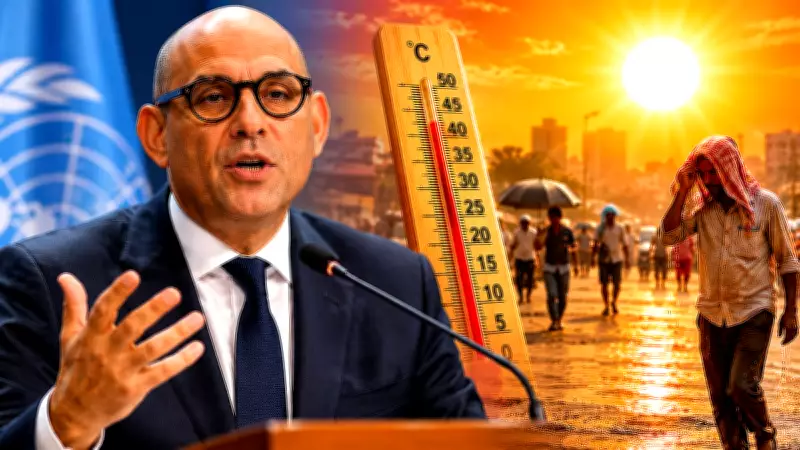
The United Nations climate chief, Simon Stiell, has attributed the extreme heatwave conditions in India to human-induced climate change. Speaking to the media, Stiell emphasized that the burning of fossil fuels and deforestation are the primary drivers behind the rising temperatures. He stated that the ongoing heatwave is a clear indication of the urgent need for global action to reduce greenhouse gas emissions and adapt to the changing climate.
Human Activities Behind the Heatwave
Stiell pointed out that the extreme temperatures being experienced in India are not a natural phenomenon but a direct result of human activities. The excessive emission of carbon dioxide and other greenhouse gases from industries, vehicles, and agriculture has trapped heat in the atmosphere, leading to a steady rise in global temperatures. He noted that the current heatwave is part of a broader pattern of extreme weather events that are becoming more frequent and intense due to climate change.
Impact on India
India has been grappling with record-breaking temperatures, with several regions experiencing heatwaves that have led to hundreds of deaths and widespread disruption. The heatwave has also put immense pressure on the country's power grid, water resources, and agriculture. Stiell expressed solidarity with the Indian people and called for accelerated efforts to build resilience against such extreme events.

Urgent Need for Emission Cuts
The UN climate chief stressed that the world must act swiftly to cut emissions to limit global warming to 1.5 degrees Celsius above pre-industrial levels, as outlined in the Paris Agreement. He warned that without significant reductions, heatwaves like the one in India will become the new normal. Stiell also highlighted the importance of transitioning to renewable energy sources and implementing sustainable land-use practices.
Adaptation and Resilience
In addition to mitigation, Stiell emphasized the need for adaptation measures to protect vulnerable communities from the impacts of climate change. This includes early warning systems, heat action plans, and investments in climate-resilient infrastructure. He praised India's efforts in expanding renewable energy capacity but noted that more needs to be done to address the escalating climate crisis.
The UN Climate Change Conference (COP28) later this year will be a critical opportunity for countries to enhance their climate commitments and accelerate action. Stiell called on all nations, especially major emitters, to come forward with ambitious plans to reduce emissions and support developing countries in their adaptation efforts.