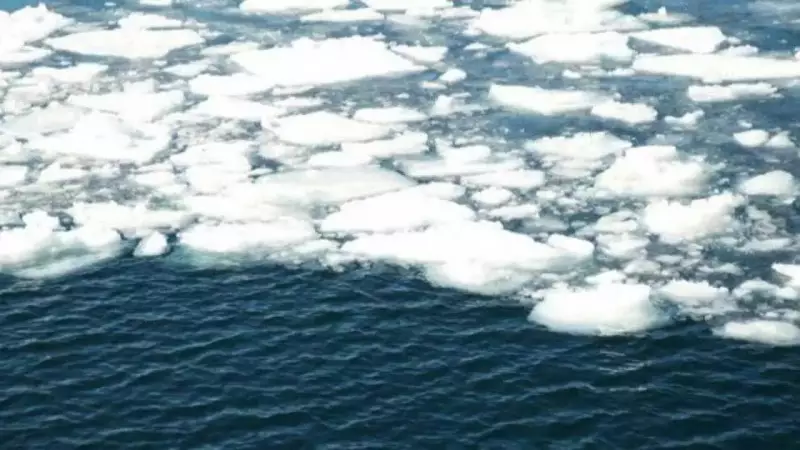
Observing an ice cube bobbing in a glass of water is a common sight, yet it represents one of nature's most vital and extraordinary anomalies. Contrary to the behavior of almost all other substances, where the solid form sinks in its own liquid, water defies this rule. This peculiar characteristic is not just a curiosity; it is a fundamental pillar supporting life on our planet as we know it.
The Molecular Dance: How Freezing Changes Water
Water is made of H₂O molecules. In its liquid state, these molecules move energetically and are packed relatively close together. However, as the temperature drops and water begins to freeze into a solid, a fascinating transformation occurs. The molecules slow down and arrange themselves into a rigid, hexagonal lattice structure. This crystalline arrangement forces the molecules to occupy more space than they did in the liquid phase. Consequently, even though the amount of matter remains unchanged, ice becomes less dense than the water from which it formed.
Density: The Deciding Factor for Buoyancy
The principle of whether an object sinks or floats hinges on its relative density—how compact its mass is. Since the molecules in liquid water are packed more tightly together than the spaced-out molecules in the ice lattice, liquid water is denser than solid ice. According to the laws of physics, a less dense object will float on a denser fluid. This is the core scientific reason why ice cubes, glaciers, and icebergs float on the surface of water bodies instead of sinking to the bottom.

The Role of Hydrogen Bonds in Creating Space
The expansion of water upon freezing is directly attributed to hydrogen bonds. These are weak attractive forces between the positively charged hydrogen atom of one water molecule and the negatively charged oxygen atom of another. In ice, each water molecule forms stable hydrogen bonds with four neighbors, locking them into that open hexagonal framework. This network of hydrogen bonds creates significant empty space between molecules, lowering the overall density. This structural quirk is unique to ice and is the definitive reason it floats.
A Protective Blanket: How Floating Ice Sustains Life
This simple property of floating has profound ecological implications. When winter arrives, the ice that forms on the surface of lakes, rivers, and oceans acts as a natural insulating barrier. It prevents the water below from losing excessive heat and freezing entirely. This crucial layer allows fish, plants, and other aquatic organisms to survive the harsh cold seasons. If ice were denser and sank, water bodies would freeze from the bottom up, turning into solid blocks of ice and making aquatic life nearly impossible. This would irrevocably disrupt Earth's ecosystems.
Furthermore, this characteristic plays a significant role in regulating the global climate. Vast expanses of ice, like polar ice caps, reflect sunlight back into space, helping to moderate Earth's temperature. The cycles of freezing and melting also contribute to oceanic currents and weather patterns. What begins as a simple observation in a kitchen glass is, in reality, a cornerstone of planetary science. Ice floats because water is uniquely and exquisitely designed to support life.