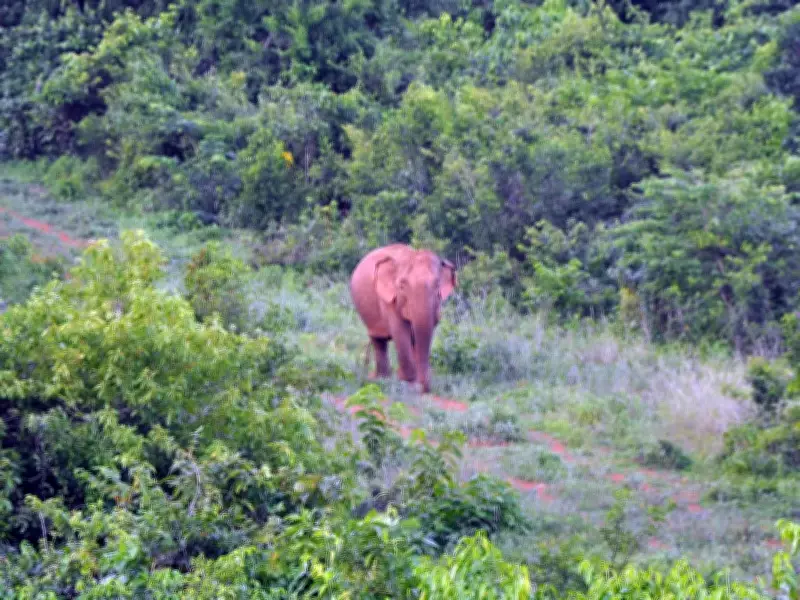
Odisha Elephant Count Discrepancy Prompts Scientific Review
A specialized team of scientists, biologists, and wildlife experts from the Wildlife Institute of India (WII) is scheduled to visit Odisha shortly. This visit comes at the formal request of the Odisha government, which seeks a comprehensive reassessment of the recent DNA-based synchronized elephant population count. The WII's 2024 census reported only 912 elephants in the state, a figure that stands in stark contrast to the Odisha Forest Department's own November 2024 census, which recorded a significantly higher count of 2,103 elephants.
Clash of Census Methodologies
The core of the dispute lies in the divergent methodologies employed. The Wildlife Institute of India's count primarily relied on advanced DNA analysis of elephant dung samples, a technique considered scientifically rigorous but complex and costly. In contrast, the Odisha wildlife wing conducted its census using the traditional direct sighting method, where enumerators physically observe and count elephants across their habitats.
Wildlife PCCF Prem Kumar Jha confirmed the impending visit, stating, "The WII scientists and possibly some officials from the Ministry of Environment, Forest and Climate Change (MoEFCC) will come to Odisha for discussions. They will re-examine the methodology WII used to determine the state's elephant numbers. We have already provided them with detailed data from our census, including photographic evidence and comprehensive habitat descriptions."

Formal Government Objections and Historical Data
The scientific team's visit follows a formal objection raised by the Odisha government. In October 2024, the state dispatched a letter to the MoEFCC strongly disputing the WII's census results. The correspondence explicitly requested the deputation of a team of experts from WII to conduct a thorough reassessment.
The government's letter articulated strong reservations, noting, "We request a team of scientists, experts, or observers be deputed from WII for a reassessment of the elephant census." It further provided historical context to bolster its case, highlighting that the state's elephant population was 1,976 in 2017, rose to 2,098 in the summer 2024 census, and reached 2,103 in November 2024, as counted by its wildlife wing.
Defending the Direct Sighting Approach
In its defense of the direct count method, the Odisha government's letter drew a critical distinction between counting different species. It argued that unlike elusive, solitary predators like tigers, mega-herbivores such as elephants are far more visible in their herd structures, making direct sighting a viable and accurate approach.
"The direct sighting method was used to count them for accurate results in the most cost-effective manner," the letter stated. "But the DNA method is more complex and involves high cost. Therefore, we request the WII to re-look at the census, including the methodology used." This visit represents a crucial step in reconciling these significant statistical differences and establishing a consensus on the true elephant population for effective conservation planning in Odisha.