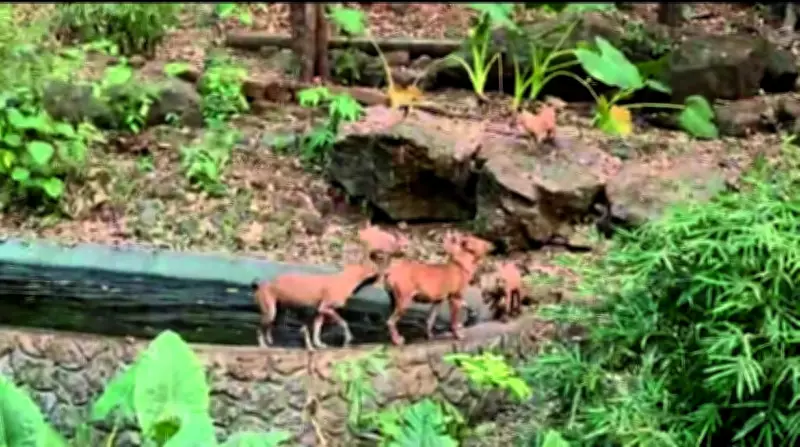
Rare Birth of Wild Dog Pups in Goa Zoo Marks Natural Adaptation Success
In an extraordinary and rare event, six wild dog pups have been born inside an enclosure at the state's only zoo, located within the Bondla Wildlife Sanctuary in Goa. This occurrence stands out as a remarkable example of in-situ adaptation, where wild animals independently choose to inhabit and thrive within a protected landscape, rather than through planned breeding programs or animal exchanges.
Unplanned Entry Leads to a New Home
The story traces back nearly two years when a pack of wild dogs, roaming freely in the Bondla Wildlife Sanctuary, ventured too close to the zoo's empty tiger enclosure while pursuing wild deer. Amid the chaos of the hunt, a pair of wild dogs crossed into the enclosure and decided to stay, with no subsequent capture or relocation efforts by zoo authorities. Instead, the officials provided care and food, allowing the animals to adapt gradually to their new surroundings.
"Nothing was forced. They entered on their own and stayed on their own," emphasized a senior zoo official, highlighting the natural and unforced nature of this adaptation. Over time, the pair settled in, exhibiting natural behaviors and eventually breeding, leading to the birth of the six pups, now a month old.

Protective Instincts and Minimal Sightings
True to their species' instincts, the wild dog pair has remained fiercely protective of their offspring. The pups are kept hidden deep inside their den, with minimal sightings reported by caretakers. The mother is briefly seen collecting meat before retreating back into the den, while the male stands guard outside, alert and motionless. Any hint of human presence prompts the pair to retreat, leaving no visible trace of the pups behind.
"Even counting them was difficult," officials noted, underscoring the challenges in monitoring the new arrivals. For now, the pups are staying out of sight, which zoo authorities describe as normal behavior. Wild dog cubs typically emerge only after a month to six weeks, often during quieter hours or at night.
Hopeful Outlook for Future Sightings
Zoo authorities are optimistic that in the coming weeks, the pups will begin venturing out, offering a glimpse into this unique natural adaptation. This event not only adds to the biodiversity of the zoo but also serves as a testament to the success of allowing wildlife to make independent choices within protected areas, fostering a more authentic and sustainable approach to conservation.