

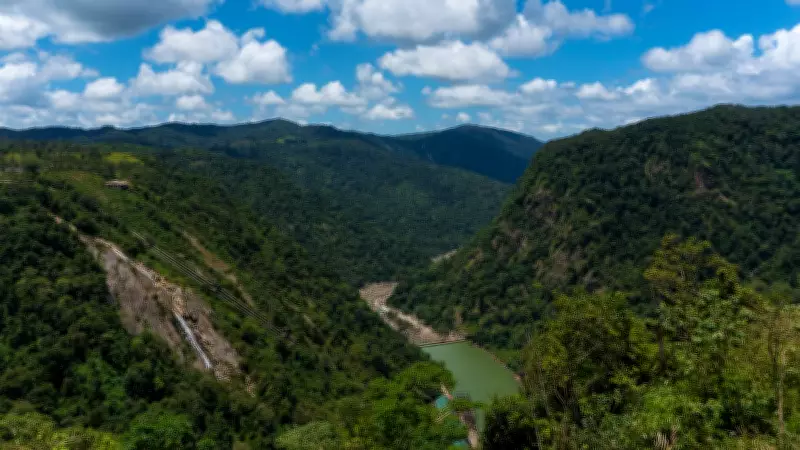
Karnataka Wildlife Board Approves Controversial Power Project in Sharavathi Valley
The Karnataka Wildlife Board has granted approval for a major power project in the ecologically sensitive Sharavathi valley, according to recently disclosed documents. The Karnataka Power Corporation Limited (KPCL) has formally sought 131.81 acres of forest land to construct a 2000 megawatt power house in this region.
Project Details and Land Requirements
The proposed project represents a significant infrastructure development aimed at boosting the state's power generation capacity. The 131.81 acres of forest land required for the power house falls within the Sharavathi valley, an area known for its rich biodiversity and ecological importance. This valley is home to diverse wildlife species and serves as a crucial watershed for the region.
The Karnataka Power Corporation Limited has submitted detailed plans outlining the technical specifications and environmental impact assessments for the 2000 MW facility. The project documentation indicates comprehensive planning for power generation infrastructure that would substantially contribute to Karnataka's energy grid.

Widespread Public Opposition and September 2025 Hearing
Despite the official approval from the wildlife board, the project has encountered substantial resistance from local communities and environmental activists across the district. During a public hearing conducted in September 2025, thousands of residents voiced their opposition to the development, with many explicitly saying 'no' to the proposed power project.
The September 2025 public hearing became a focal point for community concerns about potential environmental degradation, displacement of local populations, and impacts on the valley's delicate ecosystem. Participants raised questions about water resource management, forest conservation, and sustainable development alternatives.
Regulatory Process and Future Implications
The approval from the Karnataka Wildlife Board represents a critical regulatory milestone for the project, though additional clearances may still be required from other governmental bodies. The decision highlights the ongoing tension between infrastructure development needs and environmental conservation priorities in rapidly developing regions.
Environmental experts have expressed concerns about the long-term ecological consequences of establishing such a large-scale power generation facility in the Sharavathi valley. The area's unique biodiversity and watershed functions make it particularly vulnerable to industrial development impacts.
Local communities continue to organize against the project, citing potential threats to their livelihoods, water sources, and cultural heritage. The September 2025 public hearing demonstrated the depth of opposition, with participants presenting alternative development proposals that would preserve the valley's ecological integrity while meeting energy needs through more sustainable means.
The Karnataka government now faces the challenge of balancing energy security requirements with environmental protection commitments and public sentiment. The Sharavathi valley power project has become a symbol of broader debates about development priorities, conservation ethics, and democratic participation in infrastructure planning processes.






