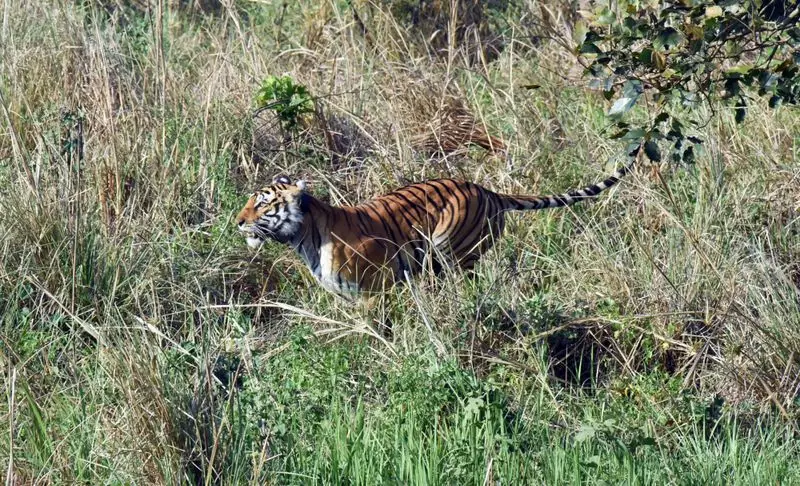
In a contentious decision that has overruled the country's apex tiger conservation body, the Uttarakhand State Wildlife Board has granted clearance for a major ropeway project inside the ecologically sensitive Rajaji Tiger Reserve. The move comes despite a firm and detailed disapproval from the National Tiger Conservation Authority (NTCA), which flagged significant threats to wildlife and a critical tiger corridor.
Project Approval Overrides Central Tiger Body's Warning
The proposal for the 2.5-kilometre-long ropeway was presented by the Uttarakhand Tourism Development Board. Its stated aim is to connect Gaurishankar Mahadev Temple in the Raipur range of the reserve to the popular tourist site of Chilla. The project received the green light during a meeting of the state wildlife board chaired by Chief Minister Pushkar Singh Dhami on April 29.
This approval directly contradicts the stance of the NTCA. In a letter dated March 18, the NTCA had explicitly advised the state government to reject the proposal. The authority's objections were rooted in the project's potential to cause "permanent and irreversible damage" to the habitat. The NTCA emphasized that the ropeway's construction and operation would lead to increased human presence, noise pollution, and disturbance in a core tiger habitat, severely impacting the behavior and movement of wild animals.

Conservationists Fear for Critical Tiger Corridor
The core of the NTCA's concern revolves around the project's location. Rajaji Tiger Reserve is part of a vital ecological network. The proposed ropeway alignment falls squarely within a crucial tiger corridor that connects the Rajaji and Corbett tiger reserves. This corridor is essential for the genetic exchange and long-term survival of tiger populations in the Shivalik landscape.
"The area is a known movement path for elephants, tigers, and other wildlife," the NTCA letter stated, highlighting the direct conflict. The construction of towers, terminals, and associated infrastructure, along with the constant movement of cable cars, would fragment this pathway. Conservationists warn that such fragmentation can isolate animal populations, increase human-wildlife conflict on the fringes, and undermine decades of conservation efforts.
State Board's Stance and Conditions
Despite these stark warnings, the Uttarakhand State Wildlife Board proceeded with the clearance. The board has, however, attached a set of conditions to the approval. These conditions mandate that the project proponent must obtain all other necessary statutory clearances, including from the Union Ministry of Environment, Forest and Climate Change. Furthermore, the board has insisted on a comprehensive plan to ensure that the construction and operation cause minimal disturbance to the wildlife.
The state government views the ropeway as a significant boost to religious tourism and local economy. The Gaurishankar Mahadev Temple attracts a large number of pilgrims, and the ropeway is pitched as a solution to provide easier access while reducing vehicular traffic inside the reserve. However, critics argue that prioritizing tourism convenience over the explicit scientific advice of the national tiger body sets a dangerous precedent for wildlife conservation in India.
The final implementation of the project now hinges on the clearances from the central ministry. The decision is likely to intensify the debate between development-oriented tourism projects and the imperative to protect India's fragile tiger habitats and their interconnected corridors.