Yamuna's White Menace Returns: Toxic Froth Reappears in Delhi's River Stretch
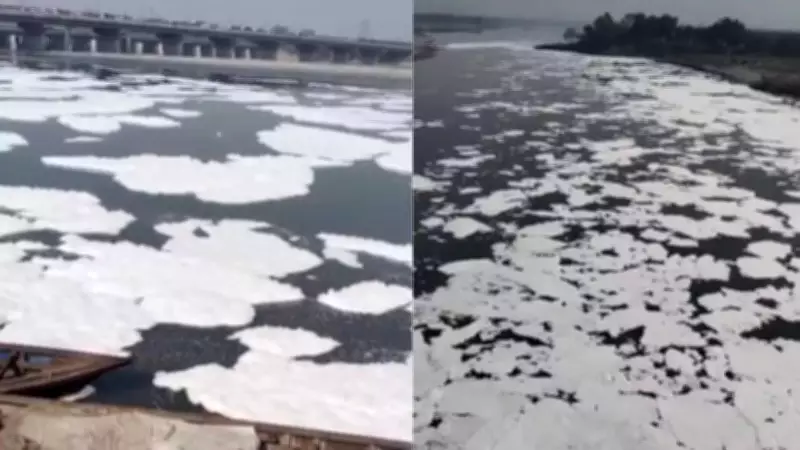
The Yamuna River in Delhi has once again become a visual spectacle of environmental neglect, as thick white froth has resurfaced at the Kalindi Kunj barrage. This alarming development serves as a stark reminder of the persistent pollution plaguing the capital's primary waterway, despite temporary interventions that briefly masked the problem.
The Return of the Foamy Blanket
After a brief period of improvement following freshwater releases, the familiar white blanket has returned to cover sections of the Yamuna. The foam, accompanied by its characteristic foul odor, has quietly reappeared, demonstrating how short-term solutions fail to address the underlying causes of river degradation. Environmental activists note that this recurrence highlights the cyclical nature of Delhi's water pollution crisis.
Diminished Urgency in Official Response
Unlike the proactive measures taken before Chhath Puja in October, when authorities implemented daily inspections and coordinated freshwater releases, the current response appears significantly muted. With the river no longer in the immediate public spotlight, the urgency to combat pollution has seemingly dissipated. Critical interventions like freshwater releases from Hathnikund have ceased, allowing pollutants to concentrate once more.

The Science Behind the Froth Formation
The reappearance of foam follows a predictable pattern linked to water management practices. During October, approximately 10 cubic meters per second of freshwater helped dilute pollutants and push foam away from critical areas. However, once these releases stopped, surfactants and phosphates from detergents and sewage began accumulating at barrages like Kalindi Kunj. This concentration process enables thick, persistent froth to form on the water surface within weeks.
Untreated Wastewater: The Core Problem
Environmental experts identify inadequate wastewater treatment as the fundamental cause of the froth's return. With minimal freshwater currently entering Delhi's stretch of the Yamuna, sewage from the National Capital Region reaches the river either untreated or insufficiently treated. This transforms what should be a flowing river into what many describe as a moving drain, carrying concentrated pollutants through the city.
Structural Barriers Worsening Pollution
Infrastructure designed to manage water flow inadvertently exacerbates pollution problems. While gates at ITO remain permanently open, barrages such as Kalindi Kunj trap contaminants in slow-moving water. This stagnation allows chemicals from household detergents and industrial waste to accumulate, creating the ideal conditions for the formation of extensive white foam sheets that have become synonymous with Delhi's Yamuna.
Monitoring Discrepancies Revealed
A concerning gap exists between official water quality data and observable ground reality. Several drains feeding into the Yamuna have recorded extremely high pollution levels, yet corresponding river stretches showed improvement in government reports. Environmental activists argue this discrepancy suggests monitoring flaws, particularly when sewage and industrial waste continue to enter the river unchecked through multiple entry points.
Questioning Official Water Quality Claims
Earlier official assessments claimed improvements in Yamuna's water quality, even as visual indicators like froth and foul odors returned. Environmentalists question how river health metrics could show positive trends on paper while the river's physical appearance visibly deteriorated. This mismatch has led to accusations of misleading reporting and calls for more transparent, comprehensive monitoring systems.
Long-Term Solutions Under Consideration
The central and Delhi governments have reviewed stalled dam projects in Uttarakhand and Himachal Pradesh aimed at restoring environmental flow to the Yamuna. While such infrastructure might help dilute pollution in the future, experts caution that without fundamental improvements to sewage treatment capacity and wastewater management, frothing will remain a recurring environmental spectacle in Delhi. The current situation underscores that structural solutions, not temporary fixes, are needed to address the Yamuna's chronic pollution crisis.