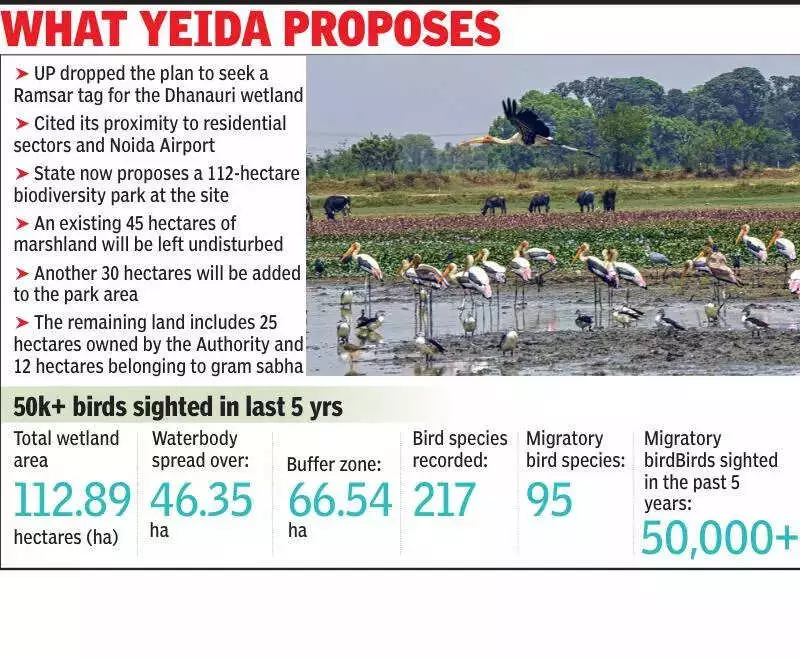
The Yamuna Expressway Industrial Development Authority (YEIDA) has officially commenced the process to appoint a consultant for a detailed feasibility study of a proposed biodiversity park at the ecologically significant Dhanauri wetland in Noida. This move follows the authority's recent decision to not pursue the prestigious Ramsar tag for the site, citing its proximity to the upcoming Noida International Airport and associated aviation safety regulations.
Preserving the Core Wetland Ecosystem
In a significant assurance for environmentalists, officials have made it clear that the core 45-hectare marshland of Dhanauri will remain completely untouched. This area is a vital habitat for over 217 species of birds, most notably the majestic sarus crane. Instead of developing this sensitive zone, the biodiversity park will be created on an additional 30 hectares of adjacent land. This strategy is designed to preserve the wetland's ecological integrity while creating a space for public engagement with nature.
"The comprehensive field survey will help us understand the unique ecological features of Dhanauri and ensure that all development plans are sensitive to its natural assets," explained a senior YEIDA official. The selected agency will document the wetland's natural terrain, existing vegetation, microhabitats, and overall ecological character.

Scope of the Feasibility Study and Master Plan
The consultant's mandate is extensive and multi-faceted. The initial feasibility study will involve a thorough assessment of:
- Watershed linkages and microclimatic conditions.
- Faunal diversity and existing wildlife corridors.
- Benchmarking against renowned biodiversity parks, eco-parks, and wetland parks in India and abroad.
- Opportunities for eco-tourism, environmental education, and nature-based recreation.
- A review of all applicable environmental laws and relevant court judgments from the NGT, High Courts, and the Supreme Court to ensure full compliance.
Following this, the study will evolve into a detailed master plan. This second phase will cover site-specific layouts, zoning, and the design of thematic gardens. Proposed themes include butterfly gardens, medicinal plant zones, aromatic flora sections, and wetland-edge flora areas. The plan will also integrate a strategy for ecological restoration and habitat enhancement.
A Focus on Native Species and Ecological Connectivity
A core component of the project will be a landscape and horticulture strategy that prioritizes native plant species. The creation of biodiversity corridors to facilitate wildlife movement will be a key consideration, ensuring the new park complements rather than disrupts the existing ecosystem. The decision to forgo the Ramsar designation was taken after considering the strict regulatory framework that comes with it, which authorities felt could conflict with aviation safety norms due to the site's location near the new airport.
This project represents a balanced approach to development, aiming to protect a critical wetland habitat while offering controlled access for education and low-impact recreation. The feasibility study is the first critical step in turning this vision into a reality.