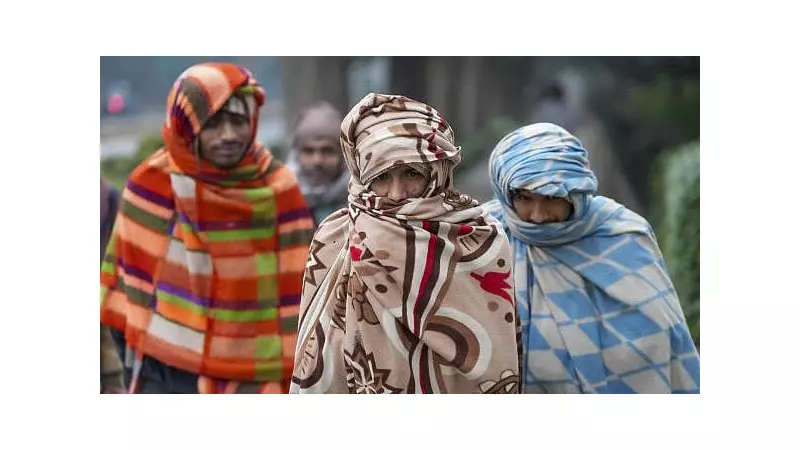
The India Meteorological Department (IMD) has issued a yellow alert for dense fog in the national capital, Delhi, for Saturday, January 20. This comes as the city experiences a familiar winter phenomenon, though with a slight silver lining: a measurable improvement in air quality.
Weather Department's Fog Warning and Forecast
According to the IMD bulletin, very dense fog conditions are very likely in isolated pockets over Punjab, Haryana, Chandigarh, and Delhi on Saturday morning. The specific alert for Delhi indicates the likelihood of reduced visibility, impacting travel and daily routines. The minimum temperature in the city is expected to hover around 7 degrees Celsius.
The forecast suggests that while the foggy mornings will persist, a gradual rise in minimum temperatures by about 2-3 degrees Celsius is expected over many parts of Northwest India during the next two days. The IMD also noted that no significant change in minimum temperatures is very likely over most parts of the country during the next 24 hours.

Air Quality Shows Positive Movement
In a related development, Delhi's air quality, which has been a major concern this winter, showed signs of improvement. The overall Air Quality Index (AQI) was recorded in the 'poor' category. This marks a shift from the 'very poor' levels witnessed in the recent past.
Data from the Central Pollution Control Board (CPCB) revealed that at 7 am on Friday, the AQI stood at 283, which falls under the 'poor' classification. The improvement is attributed to relatively better dispersion conditions. The air quality forecasting body, SAFAR, indicated that the AQI is likely to remain in the 'poor' to 'lower end of very poor' category over the coming days.
Implications and Advisory for Residents
The issuance of a yellow alert necessitates caution, especially for those commuting early in the morning. Dense fog significantly reduces visibility on roads, leading to increased risks of accidents. Travelers, particularly those using airways and highways, are advised to check schedules for potential delays.
While the air quality moving from 'very poor' to 'poor' is a positive step, it remains a health concern for sensitive groups. Authorities continue to monitor the situation, and the implementation of measures under the central government's air pollution control plan, GRAP, remains in force to prevent further degradation.
The combination of foggy conditions and poor air quality defines Delhi's winter challenge, underscoring the need for sustained efforts in pollution mitigation and public awareness regarding health precautions during such periods.