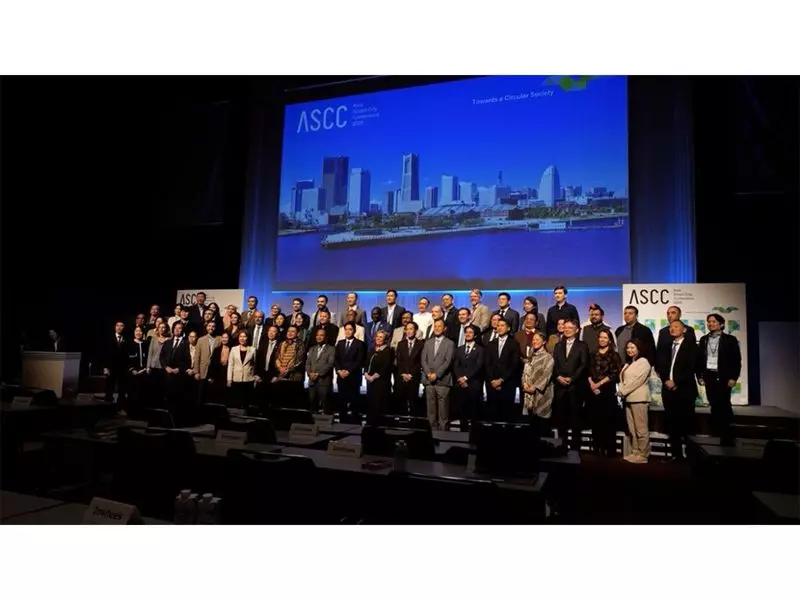
The bustling port city of Yokohama in Japan recently took center stage at a major international forum, presenting its forward-thinking vision for sustainable urban living. The city's innovative circular city model was a key highlight at the Asia Smart City Conference, drawing attention from policymakers, urban planners, and sustainability experts across the region.
Yokohama's Vision for a Circular Future
At the heart of Yokohama's presentation was its ambitious plan to transform into a fully circular city. This model fundamentally rethinks how resources are used within an urban environment. Instead of the traditional 'take, make, dispose' linear economy, the circular approach focuses on reducing waste, reusing materials, and regenerating natural systems. Yokohama officials detailed their comprehensive strategy, which integrates advanced technology with community-centric policies to create a closed-loop system for resources like water, energy, and materials.
The city's efforts are not just theoretical. Yokohama has been actively implementing pilot projects and partnerships to test and scale circular economy principles. This includes initiatives in waste management, where organic waste is converted into energy, and in construction, where building materials are designed for disassembly and reuse. The goal is to decouple economic growth from resource consumption, creating a more resilient and self-sufficient urban ecosystem.

Key Themes and Global Partnerships
The Asia Smart City Conference served as a crucial platform for knowledge exchange and collaboration. A significant portion of the discussions revolved around forming strategic partnerships to accelerate the adoption of smart and circular urban solutions. Yokohama, with its proven track record, positioned itself as a leader willing to share its expertise and learn from other cities facing similar challenges.
International cooperation was emphasized as a non-negotiable element for success. The complex issues of climate change, resource scarcity, and rapid urbanization cannot be solved by any single city or nation in isolation. The conference fostered dialogues on creating standardized frameworks, sharing data and best practices, and co-developing technologies that can be adapted to different cultural and geographical contexts across Asia and beyond.
Implications for Urban Development in India and Beyond
The insights from Yokohama's model carry profound implications for rapidly developing nations, including India. Indian cities, which are experiencing explosive growth, face immense pressure on infrastructure, resources, and the environment. Adopting circular economy principles from the planning stage could offer a pathway to sustainable development, avoiding the costly pitfalls of linear models.
For Indian urban planners and policymakers, the conference highlighted several actionable areas:
- Integrated Waste-to-Energy Systems: Converting municipal solid waste into a reliable energy source.
- Water Recycling and Management: Implementing city-wide systems for rainwater harvesting, greywater reuse, and reducing leakage.
- Green Building Codes: Mandating the use of recycled materials and designs that minimize lifetime environmental impact.
- Public-Private Partnerships (PPPs): Leveraging private sector innovation and investment for large-scale sustainable infrastructure projects.
The presentation concluded that the transition to a circular city is not merely a technological challenge but a socio-economic one. It requires strong political will, active citizen participation, and a fundamental shift in how value is perceived and created within an urban setting. Yokohama's journey offers a valuable case study, demonstrating that with deliberate strategy and collaboration, cities can evolve into engines of sustainability that enhance the quality of life for all residents while protecting the planet.