In the fragile lagoons of Lakshadweep and the electricity-starved villages of Jharkhand, young Indians are quietly building climate solutions where they matter most — at the grassroots level. These innovative efforts demonstrate how community-led action can address environmental challenges while creating sustainable livelihoods.
National Youth Climate Consortium Showcases Grassroots Leadership
On Friday, 34 young climate leaders from 32 states and Union territories presented their community-driven climate initiatives under the National Youth Climate Consortium's Climate Champions Fellowship. This collaborative program is an initiative of the Bring Back Green Foundation and Unicef India, designed to empower youth from rural, marginalized, and underrepresented regions to lead on-ground climate action.
Reviving Marine Ecosystems Through Seaweed Cultivation
On Kalpeni Island in Lakshadweep, 25-year-old marine biologist Sijahudheen is working to heal a marine ecosystem pushed to the brink of collapse. "Over the last decade, the islands lost nearly 99% of their seagrass meadows due to anthropogenic pressures such as climate change, coastal construction, and turtle overgrazing," he explained. "Seagrass beds serve as nurseries for fish, and their disappearance has had devastating repercussions — shrinking fish habitats and leaving fishing communities struggling with dwindling marine resources."

Working with NGO REEF and in collaboration with CSIR-CSMCRI, Sijahudheen introduced seaweed cultivation to the islands for the first time as a sustainable livelihood alternative. "We started with Gracilaria edulis during the fellowship and are now working on more varieties," he said. "Seaweed acts as a carbon sink, creates micro-habitats for marine organisms, and opens new income avenues for local communities."
The project uses a simple raft-based method where a 2x2 meter raft can produce up to 44 kilograms of seaweed in just 45 days. Raw seaweed fetches between Rs 60-80 per kilogram in markets in Tamil Nadu and Gujarat, where it is processed into agar, biofertilizers, and pharmaceutical products.
Seed material is sourced from nearby Chetlath Island, and Sijahudheen estimates at least 200 rafts are needed to scale the effort commercially. His current focus is on value addition through institutional support from organizations like the Central Institute of Fisheries Technology. "We want to train island communities to process seaweed locally and sell finished products directly, especially noodles to tourists, which would significantly increase profits," he emphasized.
Solar Empowerment in Jharkhand Villages
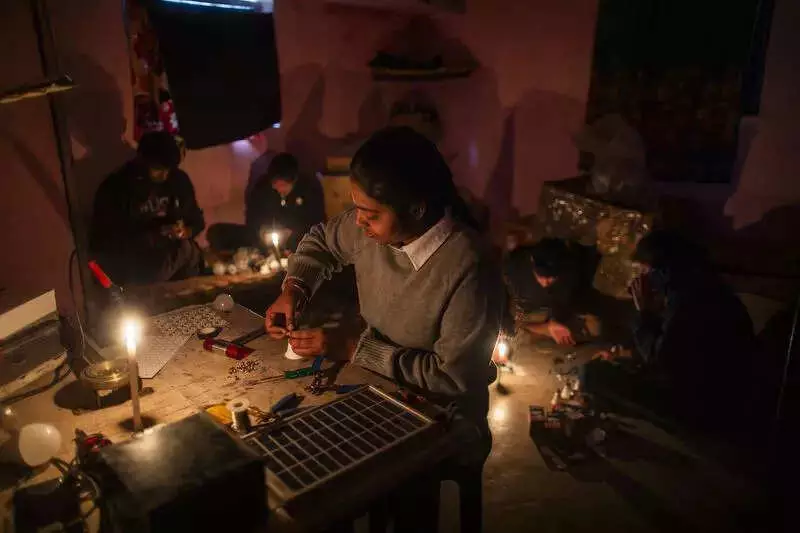
In a nondescript village in Bokaro district, Jharkhand, 20-year-old Aparna Kumari is teaching her community how to harness solar power. During the COVID-19 lockdown, Aparna experienced firsthand the consequences of energy poverty when frequent power cuts — with electricity lasting less than seven hours daily — disrupted online classes.
As a diploma student in electrical engineering, Aparna mobilized women and youth in Dantu village around renewable energy and plastic waste management. Leveraging government schemes such as PM Surya Ghar Muft Bijli Yojana and PM-KUSUM, she helped over 30 villagers receive basic solar training and enabled more than 20 farmers to adopt solar-powered irrigation pumps.
Soon, rooftop solar systems were installed on panchayat buildings, schools, and health centers, transforming public infrastructure in the village. "The real innovation began when the solar infrastructure became faulty," Aparna explained. "We trained local youth to repair solar streetlights, and under the fellowship, started manufacturing affordable solar products including torches, emergency lights, vendor lights, and solar dryers."
Already an entrepreneur with a small LED bulb manufacturing unit that employs local women, Aparna recently expanded to manufacturing these affordable solar products. The response was immediate and transformative. "Solar dryers dried moringa leaves in three to four hours, a process that previously took two to three days," she noted. "This created new income opportunities for women through moringa powder production."

Her yet-to-be-named startup, now in its third year, crossed a turnover of Rs 10 lakh last financial year while producing other energy-efficient products. Along with a group of young women known as Kumari Girls, Aparna has manufactured over 20,000 LED bulbs, 1,500 solar bulbs, and repaired more than 10,000 faulty units for the community.
The impact extends far beyond energy access. Street vendors can now keep their shops open after dark, and households no longer resort to burning plastic for light. Recognized as one of UN Women's "75 Women Leaders in India," Aparna continues to train more village women as solar technicians, creating a ripple effect of empowerment and sustainability.
Grassroots Climate Action Creating Tangible Impact
These stories from Lakshadweep and Jharkhand illustrate how young climate champions are addressing environmental challenges through innovative, community-centered approaches. From restoring marine ecosystems with seaweed farming to bringing solar power to energy-poor regions, these initiatives demonstrate that effective climate solutions often emerge from those most affected by environmental changes.
The National Youth Climate Consortium's fellowship program has provided a crucial platform for these young leaders to scale their efforts, connect with institutional support, and inspire similar initiatives across India's diverse regions. As climate change continues to impact vulnerable communities, such grassroots leadership offers hope for sustainable, locally-appropriate solutions that benefit both people and the planet.