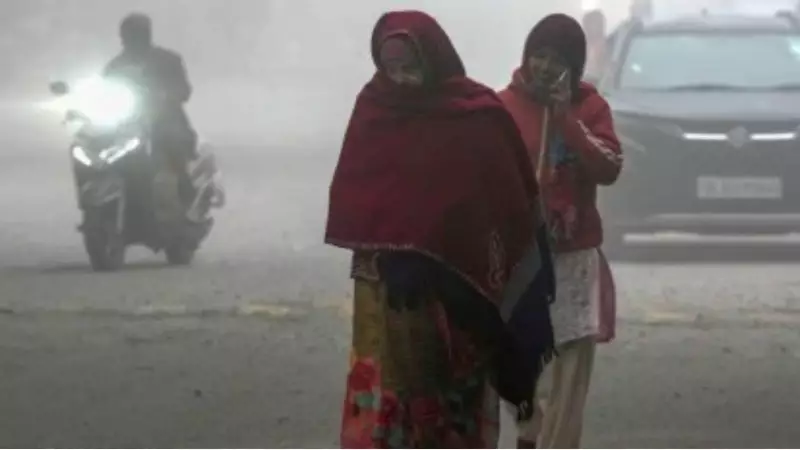
The agricultural heartland of Northwest India has been gripped by an unprecedented dry spell, with December 2025 emerging as one of the driest winter months in recent decades. Punjab, Haryana, and the Union Territory of Chandigarh recorded a complete absence of rainfall throughout the month, registering a staggering 100 per cent deficit. This extreme weather pattern, coupled with persistent dense fog, has raised serious alarms among meteorologists and agricultural experts, who warn of severe consequences for groundwater reserves and the crucial wheat and mustard crops.
Unprecedented Dry Spell Across All Districts
An analysis of monthly weather data reveals a grim picture. Punjab experienced an exceptionally dry December, with 0 mm rainfall recorded across all 23 districts between 1 and 31 December 2025. The state's normal rainfall for December is 10.9 mm. Even districts known for higher winter precipitation, such as Pathankot (normal 31.8 mm), SBS Nagar (24.2 mm), and Rupnagar (21.0 mm), remained completely parched. Historical data from 2000 to 2025 shows that while deficient Decembers are not rare, 2025 stands out as one of the driest years on record, comparable only to 2005 and 2009.
The situation was identical in Haryana, which also recorded zero rainfall across all its 23 districts. Against a normal December rainfall of 6.1 mm, the state ended the month with a –100 per cent departure, categorising it as 'extremely deficient'. Typically wetter districts like Ambala (normal 19.9 mm) and Panchkula (18.7 mm) reported no precipitation. Chandigarh, the shared capital, mirrored this trend with 0 mm rainfall against a normal of 15.6 mm.

Temperature Swings and Persistent Fog Disruptions
The month was characterised by noticeable temperature fluctuations and dense fog. Day temperatures often remained above normal, with Patiala recording a high of 28.3 degrees Celsius on December 10. However, night temperatures dipped significantly towards the month's end, with Ludhiana recording a minimum of 4.2 degrees Celsius.
Dense to very dense fog emerged as a major disruptive force. Amritsar reported very dense fog on 12 days, severely hampering road, rail, and air traffic. Similar conditions were observed in Patiala (9 days) and Ludhiana (5 days) in Punjab, and in Ambala (10 days) and Hisar (7 days) in Haryana, leading to repeated warnings from authorities for residents and commuters.
Severe Implications for Agriculture and Groundwater
The complete absence of winter rain poses a direct threat to the region's agrarian economy. Meteorologists have highlighted that the rabi cropping season, particularly for wheat and mustard, relies heavily on precipitation during December and January for crucial soil moisture.
"While dry Decembers are not entirely uncommon, a simultaneous 100 per cent rainfall deficit across the entire region is significant," said Surinder Paul, Director of the India Meteorological Department (IMD) in Chandigarh. He pointed out that the dry spell places immense stress on groundwater resources, as farmers are forced to depend entirely on irrigation to save their crops, further depleting already declining water tables.
The IMD has forecast a brief respite, predicting light to moderate rainfall with thunderstorms in isolated places across districts like Pathankot, Amritsar, Ludhiana, Sirsa, Fatehabad, and Hisar. However, the weather is expected to turn dry again after this short spell. Dry conditions are likely to persist until January 6, accompanied by continued dense fog, which will keep visibility low, especially during mornings and nights.
As the new year begins, the region faces a dual challenge: managing the immediate agricultural crisis for the rabi season and confronting the longer-term stress on its vital groundwater resources, all while navigating the daily disruptions caused by severe fog.