

‘Zombie’ Ships Evade Gulf Blockade, Signaling New Maritime Crisis in Hormuz
In a startling development highlighting the extreme measures taken to navigate the war-torn Strait of Hormuz, vessels masquerading as scrapped ships—dubbed “zombie tankers”—have been detected crossing this critical chokepoint. This phenomenon underscores the deepening maritime crisis as commercial traffic grinds to a near halt due to escalating Middle East conflicts.
Second Suspected ‘Zombie Ship’ Case Emerges in Days
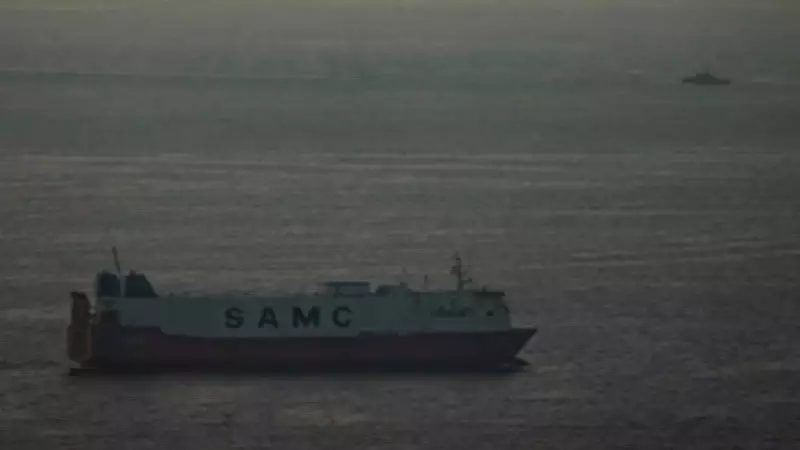
According to Bloomberg reports, a ship identifying itself as the Nabiin was tracked moving from the Persian Gulf into the Gulf of Oman between Sunday evening and Monday morning, indicating a successful transit through the Strait of Hormuz. However, records reveal that the actual Aframax tanker Nabiin, built in 2002, was sent to shipbreaking yards in Bangladesh five years ago. This strongly suggests that the vessel using that identity is a so-called “zombie tanker”—a ship sailing under the name of a legitimately scrapped vessel to conceal its true origins.
This case follows closely on the heels of another suspected “zombie ship” incident. Just days earlier, a vessel using the identity of Jamal, a liquefied natural gas (LNG) carrier listed as beached at an Indian demolition yard last year, was observed crossing the strait. Together, the Nabiin and Jamal cases illustrate the extraordinary lengths shipowners or operators are now resorting to in order to move cargo through Hormuz, where commercial shipping has slowed to a virtual standstill since the Middle East war intensified in late February.

Hormuz Remains Effectively Closed Amid Blockade
The suspected use of “zombie ships” occurs against the backdrop of an effective blockade of the Strait of Hormuz, which has been largely closed since the outbreak of the Middle East war. Only a handful of vessels have managed to transit, typically those linked to Iran or with Tehran’s approval. Others have switched off their tracking systems to evade monitoring, adding to the opacity of maritime movements in the region.
Geopolitical tensions have further exacerbated the situation. US President Donald Trump recently issued a two-day deadline for Iran to reopen the strait, threatening strikes on Iranian power plants if compliance was not met. Tehran responded with a warning that it would completely close Hormuz in retaliation for such attacks. This standoff heightens the severe threat to global energy flows, as Iranian attacks and threats have transformed the strait into a high-risk zone, bringing traffic to a near standstill.
Nabiin’s Signals Raise More Questions Than Answers
The ship posing as Nabiin entered the Persian Gulf hours before the war broke out, initially listing Iraq’s Khor Al Zubair as its destination. It remained inside the Gulf until its exit, though precise movements are difficult to trace due to heavy electronic interference affecting ship transmission signals in the area. After leaving the Gulf on Sunday, the vessel indicated it was fully laden based on draft readings but showed no clear destination, fueling speculation that it may have been carrying cargo under a false identity to avoid scrutiny or reduce interception risks.
Dubai-Linked Firms Listed, But Contact Failed
International shipping database Equasis lists Muhit Maritime FZE and Sagitta Maritime Co Ltd, both based in Dubai, as the manager and owner of Nabiin, respectively. The two companies reportedly share the same contact details. However, attempts to reach them via telephone and email were unsuccessful, with calls not going through and emails bouncing back, leaving no immediate explanation from the listed entities.
In the earlier Jamal case, the vessel’s manager was listed as Resurgence Ship Management Pvt. in Mumbai, but the company did not respond to an email seeking comment outside regular business hours, as per Bloomberg. This lack of transparency adds to the mystery surrounding these “zombie ship” operations.

A New Layer in the Dark Shipping Trade
While “zombie ships” are not entirely new to the shadow shipping world—having been previously used in sanctioned oil trades to mask identities and move restricted cargo—their deployment specifically to navigate Hormuz during an active maritime crisis introduces a new dimension to this illicit playbook. It is particularly unusual that the Jamal case involved a vessel presenting itself as an LNG carrier, given that LNG ships are far more specialized and fewer in number than crude tankers, making such impersonation more complex.
Heavy electronic interference in the region further complicates vessel tracking, with some ships voluntarily going dark for security reasons or having their location data distorted by signal disruption. This environment creates fertile ground for deceptive maritime practices.
Wider Crisis Deepens Risk to Global Shipping
The suspected “zombie tanker” crossings are unfolding against a broader regional escalation that continues to endanger maritime trade. Iran’s defence council has threatened to mine “all access routes and communications lines in the Persian Gulf and coastal areas” if its coastlines or islands are attacked, including by deploying “drifting mines.” This threat compounds the existing risks for commercial shipping, which already faces missile attacks, drones, electronic disruption, and the potential for naval mines in and around the Gulf.
International Energy Agency chief Fatih Birol has warned that “the global economy is facing a major, major threat,” comparing the current shock to the oil crises of the 1970s and the fallout from Russia’s 2022 invasion of Ukraine. The use of “zombie ships” in this volatile context not only highlights the desperation of some operators but also signals a growing instability in global energy supply chains, with far-reaching implications for international trade and security.





