Afghanistan-Pakistan Border Conflict Escalates to Dangerous New Phase in February 2026
Military tensions between Afghanistan and Pakistan erupted into one of the most serious cross-border confrontations in recent years during late February 2026. The escalation began when Afghan forces, operating under the de facto Taliban administration, launched large-scale retaliatory strikes against Pakistani military positions along the disputed Durand Line on 26 February 2026. This action came in direct response to Pakistani airstrikes earlier that same week, creating a dangerous cycle of retaliation that threatens regional stability.
Chronology of Escalation: From Airstrikes to Ground Offensives
The immediate trigger for this dangerous escalation occurred on 22 and 26 February 2026, when Pakistan conducted airstrikes targeting alleged militant camps in Afghanistan's eastern provinces of Nangarhar and Paktika. These strikes resulted in significant casualties among both militants and civilians, prompting strong condemnation from Afghan authorities who described them as violations of national sovereignty.
On 26 February 2026, Afghan defense authorities declared they had launched comprehensive retaliatory operations across multiple sectors of the Durand Line. Kabul claimed to have captured at least 19 Pakistani border posts, inflicted dozens of casualties among Pakistani troops, and seized significant military equipment. Afghan officials framed this offensive as a measured response to prior Pakistani attacks, invoking their right to sovereign defense.

The situation deteriorated further on 27 February 2026 when Pakistan escalated its response under "Operation Ghazab-Lil-Haqq." Pakistani forces conducted extensive air and ground attacks on Taliban positions across several Afghan provinces, including strikes on installations in Kabul, Kandahar, and Paktia. Islamabad reported striking multiple enemy positions, inflicting heavy casualties, and destroying ammunition depots. Both sides released conflicting casualty estimates, reflecting sharply divergent narratives about the conflict's scope and impact.
Tragically, a refugee camp near the Torkham border was also struck during these operations, adding civilian harm to the escalating conflict's consequences and highlighting the humanitarian risks of continued military confrontation.
Structural Fault Lines Driving the Conflict
The February 2026 escalation reflects deep-seated structural tensions that have plagued Afghanistan-Pakistan relations for decades:
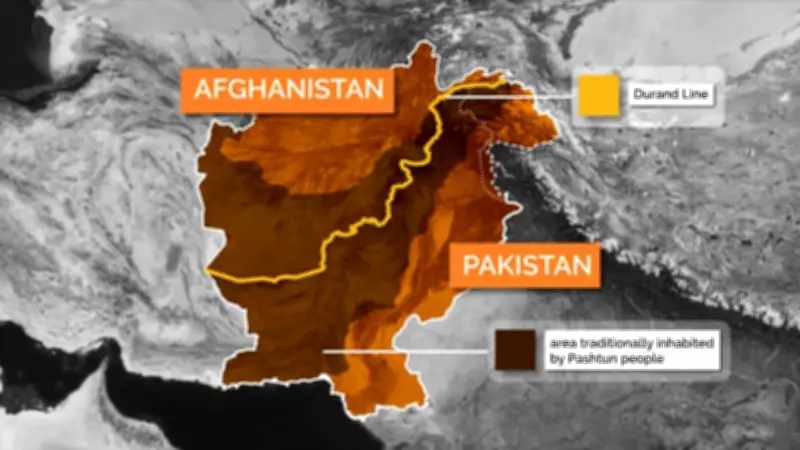
- The Durand Line Dispute: The colonial-era boundary dividing Pashtun tribal areas remains a central contention fueling mistrust between Kabul and Islamabad. While Pakistan recognizes it as an international border, successive Afghan regimes—including the current Taliban administration—have refused formal acceptance, framing it as a historical imposition that undermines Pashtun unity. This unresolved border impedes cooperative security mechanisms and provides fertile ground for interpretive disputes whenever incidents occur along the frontier.
- Militant Externalities and the TTP Factor: Pakistan's core justification for cross-border action is its allegation that Afghan territory offers sanctuaries for Tehrik-i-Taliban Pakistan (TTP) and allied militants. Islamabad contends that TTP uses these safe havens to launch attacks in Pakistan's Khyber Pakhtunkhwa and along its western flank. Kabul typically rejects these claims or asserts limited capacity to enforce its writ against such groups, partly due to ideological affinities and organizational linkages with transnational insurgent networks.
- Refugee Dynamics as Security Vectors: Pakistan hosts one of the world's largest protracted Afghan refugee populations, concentrated in frontier regions like Khyber Pakhtunkhwa and Balochistan. This demographic reality is leveraged politically and securitized by Islamabad, which periodically combines refugee management with border security operations. Kabul views deportations or restrictive policies as coercive pressure, further straining bilateral ties.
Potential Escalation Pathways and Regional Risks
The recent incidents suggest multiple dangerous escalation trajectories that could transform limited border clashes into broader regional conflict:

- Expansion of Kinetic Operations: If either side expands air or artillery campaigns beyond border regions into deeper strategic locations, the risk of significant military confrontation increases dramatically. Pakistan's strikes on bases in Kabul and Kandahar already represent such a risk, underscoring a shift from limited border engagements to broader target sets.
- Proxy and Militant Backlash: Sustained military confrontation could catalyze renewed recruitment and mobilization among TTP and other militant factions, further complicating counterterrorism strategies and potentially destabilizing provinces in Pakistan like Khyber Pakhtunkhwa and Balochistan.
- Civilian Harm and Humanitarian Crisis: Cross-border violence hitting civilian areas—including refugee settlements—can provoke humanitarian emergencies, increase internal displacement, and galvanize domestic political pressures against restraint on both sides.
- Breakdown of Diplomatic Channels: The termination of ceasefires or abrupt collapse of negotiation avenues risks transforming episodic skirmishes into protracted hostilities, especially if external mediators are absent or rejected by either party.
Recommendations for De-escalation and Conflict Management
Given the clear danger of further escalation, a multilayered policy approach is urgently necessary:
Immediate De-escalation Measures:
- Establish real-time military communication channels and crisis hotlines to manage misunderstandings and prevent inadvertent escalation
- Reinstate a neutral mediated ceasefire—possibly under United Nations or mutually acceptable regional actors—to stabilize the immediate situation
Structured Counterterrorism Cooperation:
- Create joint verification teams with Taliban and Pakistani officers (facilitated by regional mediators) to investigate cross-border militant activity
- Develop limited, secure intelligence channels focused on militant networks like TTP to build confidence without exposing sensitive sources
Durand Line Functional Management:
- Establish a pragmatic Border Management Commission focusing on de-confliction mechanisms, border fencing agreements, and monitoring systems
- Engage Pashtun tribal elders through community liaison structures to manage local insecurities and mitigate exploitation of porous border zones
Refugee Governance and Humanitarian Planning:
- Partner with the United Nations High Commissioner for Refugees to demarcate humanitarian safeguards and voluntary repatriation programs
- Decouple refugee policy from coercive security narratives through internationalized frameworks
Conclusion: Breaking the Cycle of Retaliation
The February 2026 escalation reflects deep-seated structural tensions rooted in contentious border legitimacy, insurgent externalities, refugee dynamics, and profound bilateral mistrust. The intensification of military operations from 26-27 February illustrates how rapidly retaliation can escalate into broader conflict without robust communication and crisis management frameworks.
To avert a protracted confrontation with regional repercussions, both sides—and their international partners—must prioritize mechanisms that reduce incentives for unilateral kinetic action, institutionalize incident management, and build incremental confidence even amid profound political differences. Without such strategic restraint, the cycle of retaliation risks recurring with greater ferocity, increased civilian harm, and spillover instability across South and Central Asia that could affect regional security for years to come.
The international community, particularly regional powers and multilateral organizations, must engage proactively to facilitate dialogue and create sustainable frameworks for managing this volatile border relationship before further escalation occurs.