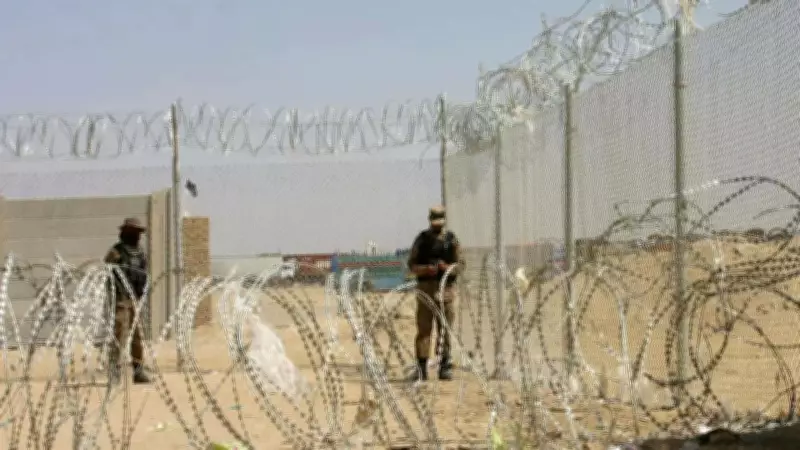
Afghanistan Initiates Retaliatory Strikes Against Pakistan in Escalating Border Conflict
Afghanistan's military authorities have announced the commencement of retaliatory strikes against Pakistan, responding directly to recent Pakistani airstrikes on Afghan territory. This development marks a significant escalation in the ongoing border tensions between the two neighboring nations.
Heavy Clashes and Immediate Aftermath
In an official statement released by the media office of a military corps in eastern Afghanistan, officials confirmed that "heavy clashes" erupted on Thursday night. According to the Associated Press news agency, the fighting was explicitly described as "in response to the recent airstrikes carried out by Pakistani forces in Nangarhar and Paktia provinces". At the time of initial reporting, there was no immediate confirmation from Pakistani authorities, and details regarding casualties remained unavailable, highlighting the fluid and volatile nature of the situation.
Trigger: Cross-Border Airstrikes and Conflicting Claims
The latest escalation follows Pakistani military strikes along the border with Afghanistan on Sunday. Pakistan's military asserted that these operations resulted in the deaths of at least 70 militants. However, Kabul vehemently rejected this claim, insisting instead that the air raids caused the deaths of dozens of civilians, including women and children.

Afghanistan's government spokesperson, Zabihullah Mujahid, stated on social media platform X: "Last night, they bombed our civilian compatriots in Nangarhar and Paktika provinces, martyring and wounding dozens of people, including women and children." The Afghan defence ministry echoed this, reporting that "dozens of innocent civilians, including women and children, were martyred and wounded" after airstrikes targeted a school and residential homes in eastern provinces.
Afghan media outlet Tolo News provided specific accounts, noting that a civilian house in the Behsud district of Nangarhar province was hit, with 23 members of a family reportedly buried under rubble. The broadcaster also detailed that the Pakistani Air Force struck a religious seminary in the Bermal district of Paktika province and conducted multiple airstrikes in the Khogyani district of Nangarhar.
Pakistan confirmed conducting cross-border strikes in the Bermal and Argun districts of Paktika, as well as in Khogyani, Bahsod, and Ghani Khel districts of Nangarhar since Saturday.
Pakistan's Justification: Targeting Militant Groups
Islamabad defended its operations, stating they were aimed at militant groups it holds responsible for a series of recent suicide attacks within Pakistan. Citing Pakistan's ministry of information, Geo News reported that seven camps and hideouts of Fitna al Khwarij—a term used by Pakistan for the banned Tehreek-e-Taliban Pakistan—along with its affiliates and Daesh Khorasan Province, were targeted. The ministry described the action as carried out "with precision and accuracy" in response to suicide attacks in Islamabad, Bajaur, and Bannu during the holy month of Ramadan.
Pakistan's state minister for interior, Talal Chaudhry, claimed the country possessed "conclusive evidence" that recent attacks, including a suicide bombing at a Shiite mosque in Islamabad that killed 31 worshippers, were orchestrated by militants under the direction of Afghanistan-based leadership and handlers. The Pakistani government has repeatedly urged Afghanistan's Taliban authorities to prevent militant groups from using Afghan soil for attacks and has called on the international community to pressure Kabul to honor commitments under the Doha Agreement.
Rising Tensions and Broader Reactions
The cross-border strikes occurred shortly after a suicide bomber drove an explosives-laden vehicle into a security post in the Bajaur district of Khyber Pakhtunkhwa province, resulting in the deaths of 11 soldiers and a child. Authorities later identified the attacker as an Afghan national. Another suicide bombing in Bannu killed two soldiers, including a lieutenant colonel.

Following these incidents, Pakistan's military issued a stern warning, indicating it would not "exercise any restraint" and would continue operations against those responsible "irrespective of their location", signaling a significant deterioration in relations between Islamabad and Kabul. Afghanistan has consistently denied allegations that armed groups are using its territory to launch attacks against Pakistan.
India also reacted to the escalating conflict. The Ministry of External Affairs stated it "strongly condemns Pakistan's airstrikes on Afghan territory that have resulted in civilian casualties, including women and children, during the holy month of Ramadan."
Historical Context and Current Implications
Relations between Pakistan and Afghanistan have remained strained in recent months, with previous border clashes leading to casualties among soldiers, civilians, and suspected militants on both sides. The latest exchanges now represent one of the most serious escalations between the two neighbors in recent times, raising concerns about regional stability and the potential for further violence.