

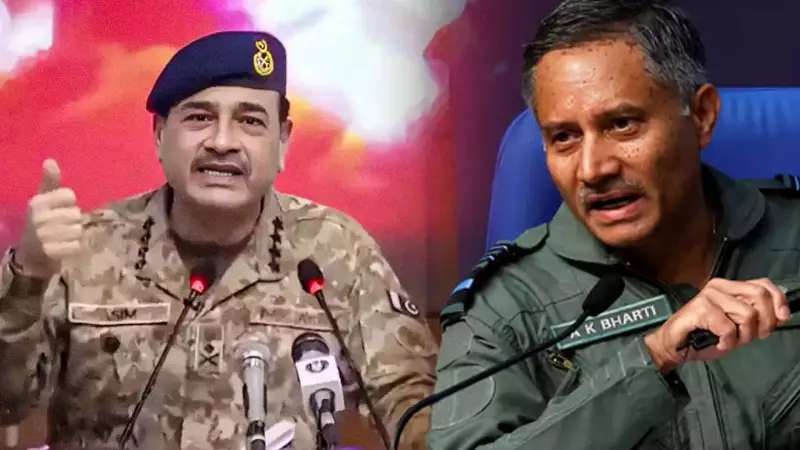
Pakistan's Army Chief, General Asim Munir, has recently made a series of assertions regarding the brief but intense military confrontation with India that followed the Pahalgam terror attack. His claims, which suggest a high degree of indigenous technological prowess, have been met with strong rebuttals based on the factual record of the engagement known as Operation Sindoor.
The Baseless Claims and the Ground Reality
General Munir stated that 90% of the technology used by the Pakistan Air Force (PAF) during the conflict was domestically developed. He further alleged that this technology succeeded in "taking out" advanced Indian assets like the Rafale fighter jets and the S-400 air defence systems. These statements, made in the aftermath of the clashes, stand in stark contrast to the verified events of the four-day period between May 7 and May 10.
Military analysts and evidence from the conflict indicate that Pakistan's operations heavily depended on foreign-supplied equipment. This primarily included Chinese PL-15 beyond-visual-range air-to-air missiles and armed drones sourced from Turkey. Contrary to Munir's narrative, India's integrated and multi-layered air defence network proved highly effective in countering these threats.

Operation Sindoor: A Timeline of Precision and Response
The sequence of events began with the terror attack in Pahalgam on May 7. In a firm response, the Indian military launched Operation Sindoor on the same day, executing precision strikes against terrorist training camps located within Pakistan and Pakistan-occupied Jammu and Kashmir (PoJK).
Over the following days, Pakistan attempted retaliatory actions. A key part of their strategy involved the deployment of Turkish-made unmanned aerial vehicles (UAVs). However, Indian air defence systems successfully tracked and neutralized these drones over the course of the conflict. The tangible proof of this effectiveness was put on display when the Indian Army showcased a downed Turkish-made Yiiha drone, clearly demonstrating the failure of these platforms to penetrate Indian airspace.
Ceasefire and the Demonstrated Edge
The military exchanges reached their conclusion on May 10. It is widely reported that Pakistan initiated the request for a ceasefire, a move seen by strategic experts as an acknowledgment of the operational disadvantage it faced during the short war.
The episode ultimately highlighted India's superior operational readiness and the formidable capabilities of its air defence shield. The claims of neutralizing top-tier systems like the S-400 remain unsubstantiated by any physical evidence or credible electronic data, while India's successful interception of drones and missiles was publicly verified. The conflict underscored India's capacity to defend its airspace while conducting precise counter-terror operations across the border.






