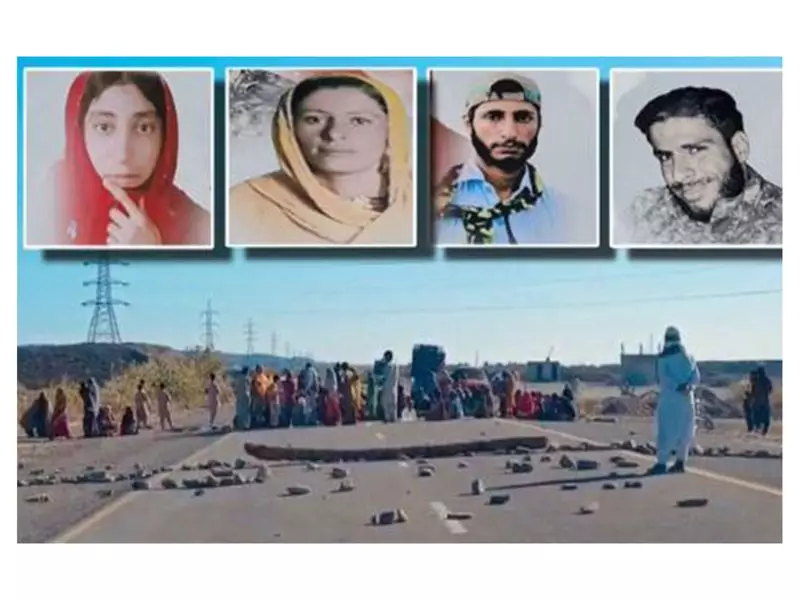
A significant protest in Pakistan's restive Balochistan province has stretched into its second consecutive day, with demonstrators effectively blocking a crucial highway linked to the China-Pakistan Economic Corridor (CPEC). The action, led by the Baloch Yakjehti Committee, is a powerful response to what participants describe as a fresh wave of enforced disappearances and alleged extrajudicial killings in the region.
Highway Blockade and Core Demands
The protestors have chosen a highly symbolic location for their sit-in: the CPEC highway near the Saryab Mill area on the outskirts of Quetta. This strategic blockade underscores their intent to draw national and international attention to their grievances. The demonstration was triggered by the recent alleged killing of a Baloch youth, whose body was reportedly discovered in a desolate area of the Kech district.
Organisers and participants are demanding a thorough and transparent investigation into this incident and numerous other cases of missing persons. Their central demands are clear and direct:

- An immediate end to the practice of enforced disappearances.
- The safe recovery and return of all missing persons.
- A halt to what they term extrajudicial killings in the province.
The Baloch Yakjehti Committee has stated that the protest will continue indefinitely until their demands are met by the authorities.
Official Response and Escalating Tensions
In response to the growing protest, a delegation from the local administration visited the site to engage with the demonstrators. Officials attempted to negotiate, urging the protestors to disperse and clear the vital highway. However, these pleas were firmly rejected by the leaders of the sit-in.
The protestors remain resolute, declaring that they will not end their blockade until concrete action is taken. They have expressed deep-seated frustration with what they perceive as empty promises and a lack of genuine political will from successive governments to address the humanitarian crisis of missing persons in Balochistan.
The blockade of the CPEC highway is a significant escalation, as the corridor is a flagship project of immense economic and strategic importance for Pakistan and its ally, China. Any prolonged disruption risks highlighting the severe underlying political and human rights challenges in the region that threaten the project's long-term stability.
A Persistent Crisis and Its Implications
The protest in Quetta is not an isolated event but part of a long-standing and painful conflict in Balochistan. For decades, Baloch nationalist groups have voiced grievances against the state, citing political marginalisation and economic exploitation of the province's rich natural resources. The issue of enforced disappearances, allegedly involving state security agencies, has been a central and volatile point of contention.
International human rights organisations have repeatedly raised concerns about the situation in Balochistan. The current protest brings these issues back into sharp focus, demonstrating the failure of dialogue and the deepening mistrust between the people of Balochistan and the central government in Islamabad.
The ongoing sit-in presents a serious challenge to the Pakistani state, balancing internal security concerns with international human rights obligations. It also casts a shadow over the CPEC, illustrating how domestic unrest can directly impact critical infrastructure and economic ambitions. The world watches to see if this protest will lead to meaningful investigation and dialogue or further entrench the cycle of alienation and conflict.