

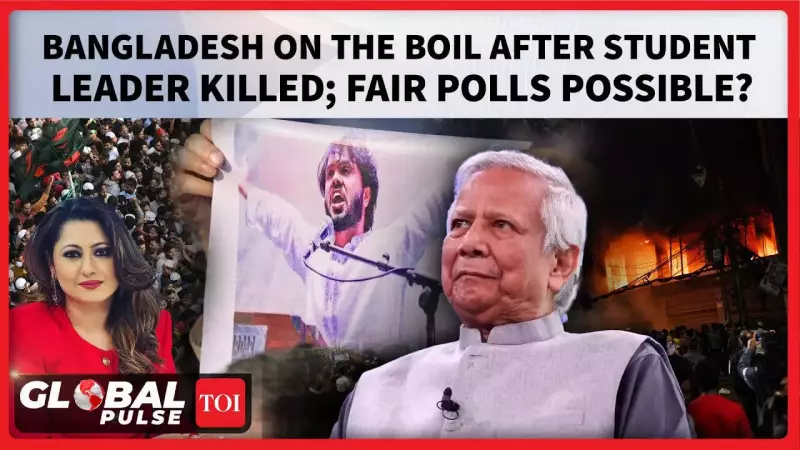
Bangladesh has been plunged into a fresh wave of severe political violence, with its capital Dhaka witnessing chaotic scenes overnight. The catalyst for this new unrest is the death of a radical student leader, which has ignited public fury and led to targeted attacks on diplomatic and media institutions.
Death of a Candidate Sparks Nationwide Fury
The crisis was triggered by the death of Sharif Osman Hadi, a prominent student figure, on Thursday. Hadi passed away in a Singapore hospital, days after being shot by unidentified attackers. He was actively campaigning to contest the upcoming national elections as an independent candidate. His killing, seen by many supporters as a political assassination, has become a flashpoint for long-simmering tensions.
Night of Rampage: Missions and Media Under Attack
Following the news of Hadi's death, violent protests erupted across Bangladesh. Enraged mobs took to the streets, targeting symbols of authority. In a significant escalation, protesters attacked the Indian High Commission in Dhaka, highlighting the international dimensions of the domestic crisis. Simultaneously, offices of several media houses were also torched and vandalized, raising serious concerns about press freedom and safety.

In a clear sign of the political nature of the violence, mobs also stormed and damaged party offices belonging to the Awami League, the political party of former Prime Minister Sheikh Hasina. Hasina was ousted from power seventeen months ago amid a previous violent uprising, and the country has been under an interim administration since.
Government Response and Mounting Tensions
Facing a rapidly deteriorating law and order situation, the head of Bangladesh's interim government, Muhammad Yunus, has publicly intervened. Yunus has promised a thorough investigation and vowed to bring the perpetrators behind Hadi's killing to justice. This pledge is aimed at calming public anger, but it remains to be seen if it will be enough to quell the widespread protests.
The current violence underscores the deep and unresolved political fractures within Bangladesh. With the shadow of past conflicts and the question of future elections looming, the interim government faces a formidable challenge in restoring order and navigating the country toward a stable political pathway.






