

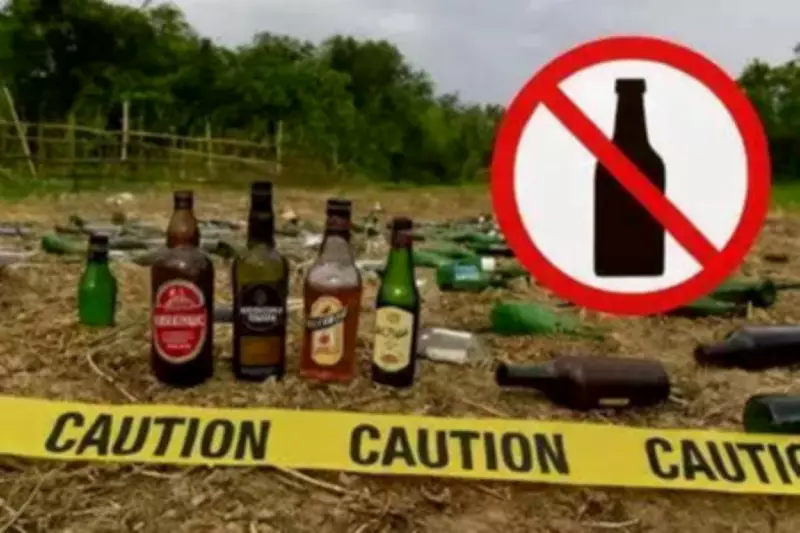
Bihar's Prohibition: A Decade of Illicit Liquor Trade
In Kankarbagh, an upscale locality in Patna, 'pure milk' does not mean pasteurized milk; it is a code word for expensive blended Scotch whisky sold in tetra packs to avoid detection. In dry Bihar, where prohibition has been in effect for the past ten years, 'sonapapdi' has become a code for expensive alcohol smuggled from neighboring states like Jharkhand, Uttar Pradesh, and West Bengal. The illicit business is thriving, operating like a high-stakes game of cat-and-mouse. In district towns and the state capital, terms like 'samosewala', 'grocerywala', and 'sanyasi baba' refer to young boys who ensure timely home delivery of Indian-made foreign liquor (IMFL).
A Flourishing Black Market
Prohibition has created a flourishing black market with a meticulous home-delivery system that rivals pizza delivery speeds. Young agents, often operating with tacit understanding from authorities, deliver liquor to doorsteps. In posh localities of Patna, codes like 'tuition ma'am', 'nurse ma'am', and 'parlourwali' refer to women who deliver alcohol. One agent, Munna, wears a formal shirt, rides a scooter, and carries a laptop bag. He delivers bottles hidden inside hollowed-out food cartons, posing as a grocery delivery person.
Another agent, known as 'Sanyasi Baba', runs a localized home-delivery network that delivers within five minutes for a premium. Prices range from Rs 200 to Rs 600 for a 180ml pack, depending on the brand. The system operates through WhatsApp groups like 'Health & Fitness', where messages such as 'Need two protein shakes and two pure milk' trigger deliveries by 'milkmen' on motorcycles carrying heavy milk cans.

Impact of Prohibition: Social Benefits vs. Enforcement Failures
Introduced by then Chief Minister Nitish Kumar in 2016, the ban aimed to reduce alcoholism, poverty, and domestic violence. A decade later, its record is divided between improvements in household welfare and public health, and revenue collapse, black-market expansion, and judicial overload. The legal market's disappearance did not eliminate demand but created a vast illicit trade worth an estimated Rs 25,000 to Rs 30,000 crore.
Inventive Smuggling Techniques
Smugglers have adopted creative methods, such as the 'ninja technique' where bottles are hidden inside hollowed-out plastic chairs or under layers of vegetables. In Kishanganj, 862 litres of foreign liquor were concealed under fresh tomatoes and cabbage. In Nawada, a motorcycle's fuel tank was used for liquor, with a separate petrol box under the seat. Liquor has also been found in cut-out gas cylinders, water supply tankers, and ambulances. In Saran, a tanker bearing government slogans like 'Swachh Bharat Abhiyan' was stuffed with 330 cartons of Haryana-made whisky.
Consequences: Arrests, Substance Abuse, and Hooch Tragedies
The ban wiped out a legal retail economy of about 5,480 licensed shops supporting 30,000 to 40,000 families. Over the past decade, 1.6 million tipplers have been arrested, and 4.5 crore litres of liquor seized. However, prohibition has led to a rise in substance abuse, with ganja, opium, charas, and cough syrups becoming alternatives. Spurious liquor has caused repeated hooch tragedies, with hundreds dying from methanol poisoning in districts like Siwan, Begusarai, and East Champaran. The government now provides compensation of Rs 4 lakh to victims' families.
Shift in Consumption Patterns
Among younger users, prohibition has shifted consumption patterns rather than ending addiction. Studies show over 25% of habitual drinkers moved to other substances, including synthetic drugs, ganja, and charas. This rise in 'dry drugs' is a worrying side-effect.
Political Landscape and Future Outlook
As Bihar enters its second decade of prohibition, political unity is showing strain. Women's groups remain strong supporters, but calls for reassessment are growing across party lines. New Chief Minister Samrat Choudhary has stated the ban will stay. Bihar faces a crossroads: one path involves a softer framework like the Gujarat model of regulated permits, while the other continues rigid prohibition despite mounting evidence of leakage and black-market growth.






