

A prominent American think tank has raised a significant alarm, warning of the possibility of a renewed armed conflict between India and Pakistan in the year 2026. The caution comes from the Council on Foreign Relations (CFR) in its latest annual survey, which points to 'heightened terrorist activity' as a primary trigger for such a confrontation.
CFR's Conflict Risk Assessment for 2026
The Council on Foreign Relations (CFR), a major US-based organization focused on foreign policy, conducted a year-end survey among American foreign policy experts. The goal was to assess global conflicts that could threaten US national security and international stability in the coming year. For the first time, the report also identifies opportunities for preventive action.
The surveyed experts rated various global contingencies based on their likelihood and potential impact on US interests. These were then sorted into three preventive priority tiers. The potential for an India-Pakistan conflict has been placed in Tier II, indicating a 'moderate likelihood' and 'moderate impact.' The specific scenario outlined is "the renewed armed conflict between India and Pakistan due to heightened terrorist activity."

Trump Administration's Role and Regional Context
The CFR report makes a notable claim about the role of the United States under a potential second Donald Trump administration. It states that such an administration had 'sought to end' the conflict between New Delhi and Islamabad, alongside other ongoing wars in regions like Ukraine, Gaza, and the Democratic Republic of Congo.
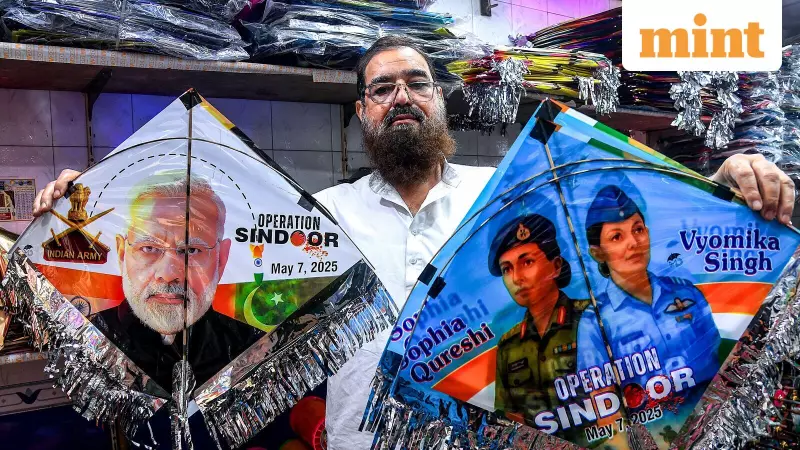
This assessment is set against the backdrop of a recent military clash between the two South Asian neighbours. In May of this year, India and Pakistan were involved in a four-day military conflict. India launched precision strikes on terror camps in Pakistan and Pakistan-occupied Kashmir, an operation it termed 'Operation Sindoor.' This action was a direct response to a devastating terror attack in Pahalgam that claimed the lives of 26 civilians.
The report references President Donald Trump's repeated claims that he personally intervened to stop the May conflict, even suggesting he averted a "potential nuclear war." These assertions have been firmly rejected by the Indian government. India clarified that the ceasefire was the result of direct communication between the Director Generals of Military Operations of both armies on May 10, leading to an understanding to cease firing along the Line of Control.
Broader Global Conflict Landscape
The CFR's 'Conflicts to Watch in 2026' report highlights several other potential flashpoints around the world. The highest-risk Tier I category anticipates increased conflict between Israeli security forces and Palestinians in the West Bank.
Other significant conflicts flagged by the experts include:
- An intensification of the Russia-Ukraine war.
- Renewed armed conflict between Iran and Israel.
- A major AI-enabled cyberattack on US critical infrastructure.
- Escalation of the civil war in Sudan.
- Renewed hostilities between Armenia and Azerbaijan.
Closer to South Asia, the report also predicts a 'moderate likelihood' of an armed conflict between Afghanistan and Pakistan in 2026, triggered by "resurgent cross-border militant attacks." This contingency is placed in Tier III.
Key Takeaways and Preventive Hopes
The core message from the CFR survey is one of heightened concern among US foreign policy experts about international conflicts spilling over to affect American security. The India-Pakistan dyad remains a persistent worry within this matrix.
The report concludes with a critical hope regarding US policy: "Hopefully, the Trump administration will reverse course in the coming months by no longer alienating important allies and partners, while giving more emphasis to upstream efforts known to promote peace and stability, particularly in areas important to the United States." This underscores the think tank's view that proactive, diplomatic prevention is crucial to averting the conflicts it has identified, including the potential clash between India and Pakistan.






