

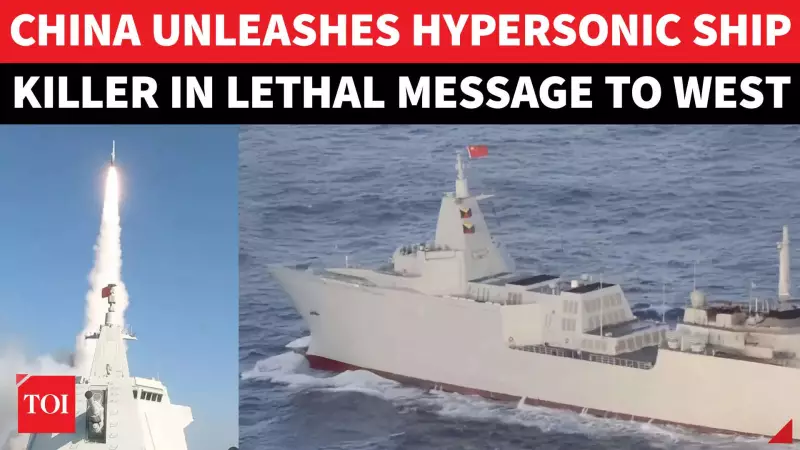
In a significant display of naval power, China has publicly showcased the launch of its advanced YJ-20 hypersonic anti-ship missile from a major warship. The rare footage, released on December 29, 2025, highlights Beijing's rapidly advancing military capabilities at a time of heightened tensions surrounding Taiwan and Western naval activity in the Indo-Pacific region.
A Glimpse of Advanced Warfare: The YJ-20 Launch
The video evidence shows the YJ-20 missile being fired from a Type 055 Renhai-class guided-missile destroyer, one of the most powerful surface combatants in the Chinese navy. This is not a routine drill. The weapon is specifically engineered for a near-vertical terminal attack profile, making it exceptionally difficult for existing ship defence systems to intercept. This 'top-down' strike method is designed to penetrate the heavily armoured decks of aircraft carriers, earning such missiles the grim nickname of 'carrier-killers'.
Strategic Timing and the Message to the World
The decision to release this footage is widely interpreted by global security analysts as a calculated strategic signal. It comes amidst ongoing friction between China and the United States over the status of Taiwan and freedom of navigation in the South China Sea. By flaunting this capability, China is sending a direct warning to Western navies, particularly the US Navy's carrier strike groups that frequently operate in the Pacific theatre. The message is clear: Beijing is developing the tools to challenge and deter the projection of traditional naval power in what it considers its sphere of influence.

Implications for Regional Security Balance
The successful integration of a hypersonic anti-ship missile like the YJ-20 onto its premier surface warships marks a leap in China's anti-access/area-denial (A2/AD) strategy. This development potentially alters the risk calculus for any naval force, including those from India, operating near Chinese maritime claims. It underscores a global shift towards hypersonic weapons and pushes other major powers to accelerate their own defence and deterrence programs. The test reinforces the ongoing and intense military modernisation drive of the People's Liberation Army Navy (PLAN).
For India, a key stakeholder in the Indo-Pacific, these advancements have direct implications for regional maritime security. They highlight the critical need for continuous technological advancement, intelligence gathering, and strategic partnerships to ensure a stable balance of power in the waters critical to global trade and security.






