

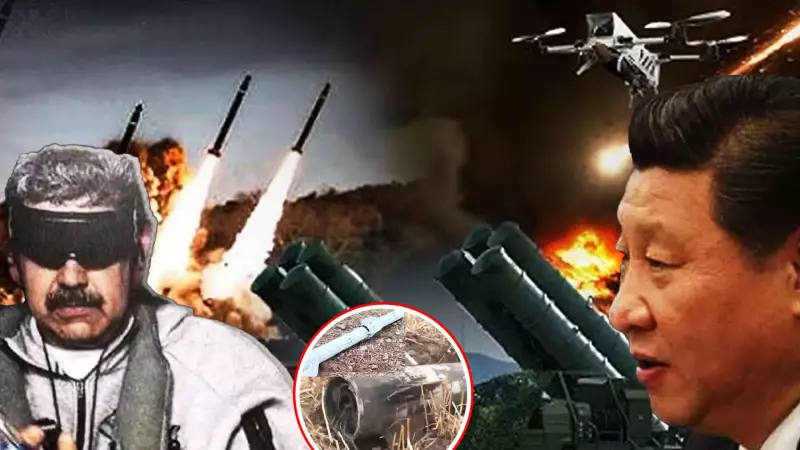
Recent combat operations across two continents have delivered a severe blow to the reputation of Chinese-made military hardware, particularly its air defence and radar systems. Real-world engagements during Operation Sindoor in South Asia and a US military action in Venezuela have exposed critical vulnerabilities, raising serious questions about their tactical reliability and effectiveness against modern threats.
Operation Sindoor: Indian Forces Penetrate Chinese-Made Pakistani Defences
During the military action codenamed Operation Sindoor, Indian forces demonstrated a significant capability to bypass advanced air defence networks supplied by China to Pakistan. According to reports from January 2026, systems like the HQ-9 and HQ-16, which form a core part of Pakistan's strategic air defence, failed to intercept incoming high-speed missiles and drones.
This failure was not a minor glitch but a fundamental operational shortcoming during active combat. The inability of these expensive, marketed-as-state-of-the-art systems to provide a reliable shield has reinforced long-standing doubts within defence circles about their actual performance when faced with sophisticated modern warfare tactics.

Venezuela Test: US Raid Neutralizes Integrated Radar Networks
In a separate and starkly revealing incident, a United States military raid on Venezuela successfully neutralized an integrated air defence network that included Chinese radar technology. Key systems such as the JY-27A long-range surveillance radar, along with other Russian systems integrated with them, were effectively rendered useless.
The raid, which involved US special forces, reportedly encountered little to no resistance from the kinetic air defence systems. The radar networks were either jammed electronically or bypassed completely, leaving the defences silent. This outcome is particularly embarrassing for Caracas, which had invested heavily in these systems, and for Beijing, which promotes them as formidable deterrents.
Global Arms Market Reputation at Stake
The consecutive failures in live combat scenarios have consequences far beyond the immediate tactical losses. They strike at the heart of China's ambitious arms export strategy. For years, Chinese defence companies have competed aggressively in the global market, often offering technologically advanced systems at competitive prices.
However, as these incidents show, battlefield performance is increasingly trumping marketing claims. Potential buyer nations, especially those in conflict-prone regions, are now forced to scrutinize whether these systems can deliver under fire or if they represent a costly strategic weakness. The credibility of China as a reliable supplier of high-end military technology is now under unprecedented scrutiny.
These events underscore a harsh truth in modern defence procurement: real combat is the ultimate test, and for two key Chinese air defence systems in early 2026, that test ended in failure. The ramifications for future arms deals and global military balances are likely to be significant.






