

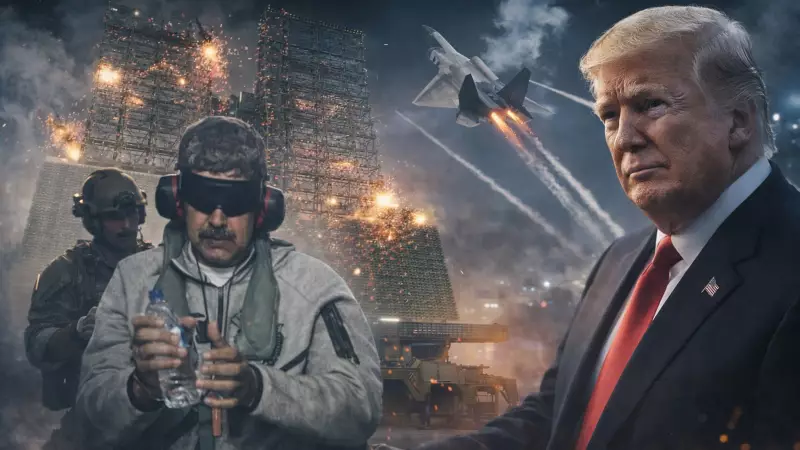
The dramatic capture of Venezuelan President Nicolás Maduro by United States forces in Caracas has triggered a major reassessment of the country's military capabilities. A key point of failure, according to multiple defence analysts, was Venezuela's reliance on Chinese-origin military hardware, particularly Beijing's much-touted anti-stealth radar systems.
Operation Exposes Critical Defence Flaws
The incident, which culminated on January 8, 2026, saw US operatives successfully apprehend President Nicolás Maduro in the heart of the Venezuelan capital. The operation's success, despite Venezuela's significant investment in air defence networks, has sent shockwaves through global defence circles. Analysts are now intensely scrutinising the performance of the Chinese-supplied technology that was supposed to protect the nation's airspace and key leadership.
Scrutiny on Chinese Anti-Stealth Technology
Venezuela had heavily invested in military hardware from China, viewing it as a strategic counterbalance to US influence. The centrepiece of this defence shield was a suite of advanced anti-stealth radar systems, promoted by Beijing as capable of detecting modern stealth aircraft and covert incursions. However, the seamless execution of the US mission in Caracas suggests these systems failed to provide an effective warning or deterrent.

This failure raises serious questions about the operational effectiveness and battlefield reliability of such exported defence systems in real-world, high-stakes scenarios. The analysts point out that the event is not just a political catastrophe for the Maduro government but also a significant reputational blow to China's defence export ambitions, especially in regions seeking to counter US military superiority.
Broader Implications for Global Defence Partnerships
The aftermath of the operation extends far beyond Venezuela's borders. It serves as a stark case study for nations worldwide that depend on imported military technology for their core security. The key implications identified by experts include:
- A reassessment of technology reliance: Countries may now think twice before building their national defence strategy around a single foreign supplier's untested systems.
- Questions on technology parity: The event highlights a potential gap between marketed capabilities and actual performance against top-tier adversaries.
- Geopolitical recalibrations: The failure could influence how other nations in Latin America, Asia, and Africa structure their future defence procurement plans.
In conclusion, the capture of President Maduro was more than a daring military and political move. It was a live-fire test that, according to defence analysts, exposed critical vulnerabilities in sophisticated Chinese radar systems, prompting a global rethink on the true value of high-profile defence imports.






