

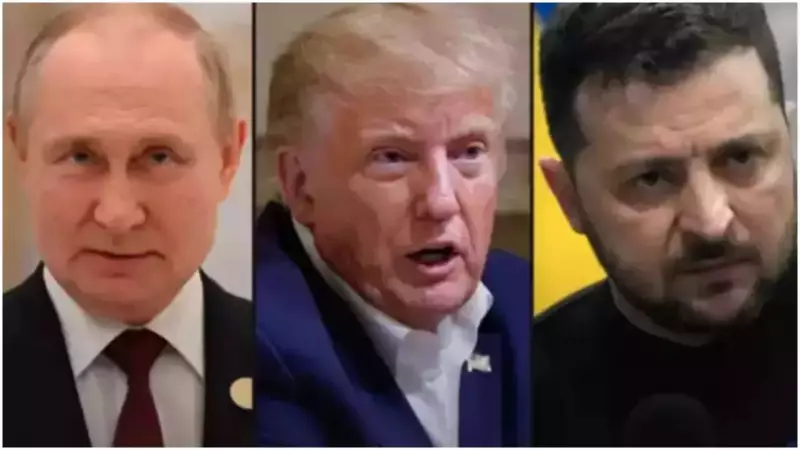
In a significant development that contradicts Russian assertions, the Central Intelligence Agency (CIA) of the United States has concluded that Ukraine was not behind any attack targeting Russian President Vladimir Putin or one of his residences this week. This finding, reported by US officials, directly rebuts a claim made by Putin during a phone conversation with former US President Donald Trump on Monday.
The Intelligence Briefing and Political Reactions
CIA Director John Ratcliffe personally briefed Donald Trump on this intelligence assessment, according to a source familiar with the matter. While Trump has not publicly confirmed the CIA's finding, he shared a link on social media to a New York Post editorial on Wednesday. The editorial placed blame on Putin for obstructing a peace deal with Ukraine and questioned the truthfulness of his claim about being targeted.
Earlier, on Monday, Trump had stated he was "very angry" about the alleged attack after hearing about it from Putin. However, he also admitted he lacked independent verification and acknowledged it was "possible" the incident never occurred. "It's a delicate period of time. This is not the right time. It's one thing to be offensive because they're offensive. It's another thing to attack his house," Trump remarked, highlighting the sensitive nature of the allegation.

Russia's Unsubstantiated Claim and Ukraine's Firm Denial
Russia had asserted that a drone attack was aimed at Putin's residence in the Novgorod region. Moscow used this allegation to threaten a hardening of its position in already difficult negotiations to end the war. Critically, Russia has failed to provide any clear-cut evidence to support the claim of the purported drone attack.
The US intelligence finding, first reported by The Wall Street Journal, aligns perfectly with Ukraine's consistent denial. Ukrainian President Volodymyr Zelensky took to social media to dismiss the Russian narrative, calling it "a complete fabrication intended to justify additional attacks against Ukraine." The White House, when questioned, directed attention to Trump's social media post, while the CIA declined to comment officially.
Implications for Stalled Peace Talks
This incident underscores the deeply thorny issues hampering diplomatic efforts to end the conflict. Russia's attempt to leverage an unverified claim to gain a tougher negotiating stance has been undercut by US intelligence. The revelation adds another layer of complexity to an already fragile process, raising questions about the credibility of narratives presented by Moscow to influence international opinion and negotiation dynamics.
The CIA's determination not only supports Ukraine's position but also isolates the Russian claim, potentially limiting its utility as a propaganda tool or a pretext for military escalation. As talks remain bogged down, the exposure of such disputed allegations makes the path to peace even more challenging.






