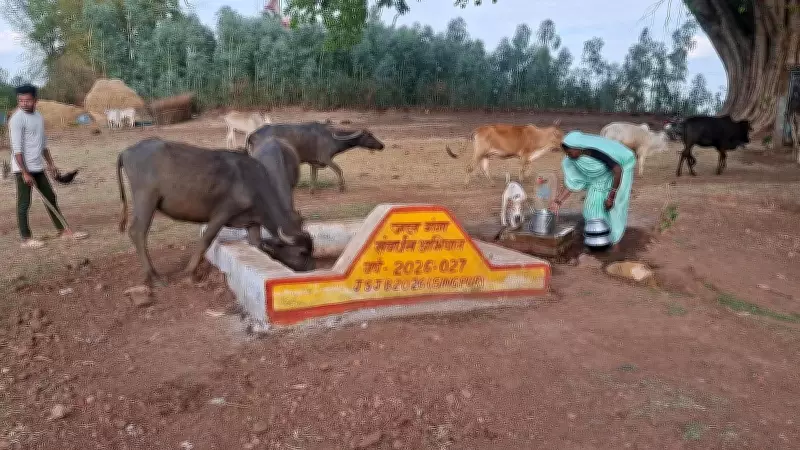
Jabalpur: At a time when several Madhya Pradesh districts are struggling with severe heatwaves and a water supply crisis, the tribal-dominated Dindori district has emerged as an unexpected national model for water conservation. It secured the first position in the state and second nationally through its pioneering 'Jal Sanchay Bhagidari' campaign.
Community-Driven Initiative
Often considered one of the state's most underdeveloped and resource-constrained districts, Dindori turned its traditional tribal ethos of living in harmony with nature into a large-scale people's movement. Through public participation and low-cost innovations, the district created nearly three lakh water conservation structures aimed at preserving every drop and improving groundwater recharge.
According to district officials, the campaign was driven not merely as a government scheme but as a community initiative. Public awareness initiatives such as jal chaupals, kalash rallies, and street plays were organized across villages to encourage residents to adopt water conservation practices.

Innovative Techniques and Volunteer Efforts
Residents and women's self-help groups volunteered to pilot the initiative and actively participated in building and maintaining structures ranging from recharge pits and farm ponds to check dams and contour trenches. As part of the 'Ek Bagiya Maa Ke Naam' initiative, about 3,500 fruit-bearing saplings were planted. To ensure irrigation remains unimpeded even in harsh summer months, villagers improvised drip irrigation systems using discarded plastic bottles and earthen pots, allowing plants to survive with minimal water usage.
Water harvesting systems were also installed in government buildings, while soak pits were constructed to improve rainwater percolation. Schools and hostels developed kitchen gardens where wastewater from kitchens and bathrooms was diverted through drains for irrigation purposes.
Overcoming Limitations
Collector Anju Pawan Bhadauria said Dindori's soil has poor water retention capacity, forcing many farmers to rely on single crop cultivation annually. Despite these limitations, the district succeeded in transforming water conservation into a grassroots campaign.
According to data available with the district administration, about 2.98 lakh structures have been developed under the initiative, including more than 41,000 recharge pits, nearly 10,000 farm ponds, over 6,000 check dams, and thousands of rooftop water harvesting systems, dugwell recharge units, and gully plugs.