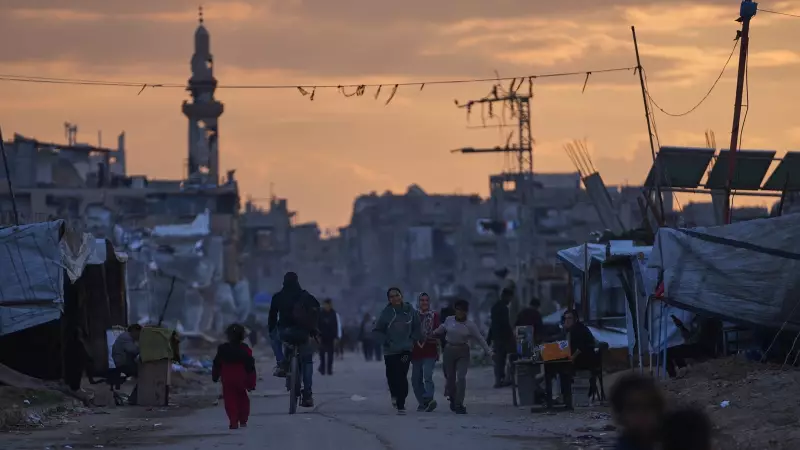
A powerful photograph from the war-torn Gaza Strip has left a deep and lasting emotional impact, serving as a stark symbol of the human and animal cost of conflict. The image, which surfaced recently, depicts a battered donkey pulling a cart laden with a fleeing family and their meager belongings, a scene that transcends immediate suffering to speak of a deeper, more universal tragedy.
The Image That Evoked a Flood of Memories
For the author, Shelley Walia, a former Professor of Cultural and Literary Theory and UGC Professor Emeritus at Panjab University, Chandigarh, the sight triggered a poignant childhood memory. It recalled the gentle rhythm of tongas outside Indian railway stations, with their patient horses and wooden wheels, offering family rides filled with simplicity and wonder. This tender recollection made the contrast with the Gaza image all the more devastating.
The photo, taken in the Nuseirat area of central Gaza, shows a donkey-drawn cart creaking forward under a heavy load. A family, with three children clinging to their parents, is attempting to flee. Bags of possessions teeter precariously, and the donkey itself appears thin and exhausted, yet it pulls onward. This visual, captured on January 8, 2026, became a breaking point for the observer, not just for the evident human plight but for the silent, uncomplaining resilience of the animal.

The Donkey as a Symbol of Mute Endurance and Abandonment
The donkey, an animal often subjected to mockery and neglect, here becomes an indispensable yet anonymous labourer of war. It does not choose its burden, understand the politics of the conflict, or speak of its pain. In its mute endurance, it exposes what the author calls "the obscenity of a politics that blesses destruction while speaking the language of security and destiny."
The reflection draws a parallel to the biblical journey of Joseph and Mary fleeing to Egypt with the infant Jesus, a narrative comforted by the gentle carol "Little Donkey." However, in Gaza, there is no promised manger or rest at the end of the road. This donkey moves not toward Bethlehem but through rubble and smoke, with no Christmas joy or new year's song in sight. It represents the ultimate voiceless victim in a landscape where modern systems have utterly collapsed.
The helplessness is palpable: the wide-eyed children on a journey to nowhere, the father powerless to protect them, and the donkey performing a task it was never meant to bear. Yet, within this tragedy, the cart holds a strange, heartbreaking cosiness—the children huddle as if on a picnic, and the donkey persists, perhaps hoping for a stable beyond the misery.
A Scathing Indictment of Modern Apathy and Hubris
In an age obsessed with speed, symbolized by luxury cars like Maseratis, Porsches, and Ferraris, and the detached violence of drones, the donkey cart seems a relic. Yet, it powerfully resists the "tyranny of haste." Its slow, laborious journey through devastation is a profound critique of technological hubris and the empty rhetoric of international intervention.
The author finds a Kafkaesque or Beckettian quality in the scene, where the fragmentation of all reason leaves only the mute persistence of the powerless as a bastion of hope. The donkey's steadfast companionship starkly contrasts with the abandonment of humanity by the machines of war, laying bare the bankruptcy of our civilizational claims.
Ultimately, the donkey in Gaza emerges as a silent comrade in the struggle for survival. In a world where human conscience is buried under propaganda, this humble creature bears the physical weight of survival and the metaphorical weight of a world's cold, calculated silence. The image, as Professor Walia concludes, defines what dignity looks like amidst ruins—found in movement, endurance, and unconditional care, even when no reward awaits.