Mexico's Most Wanted Cartel Boss El Mencho Killed in Government Operation
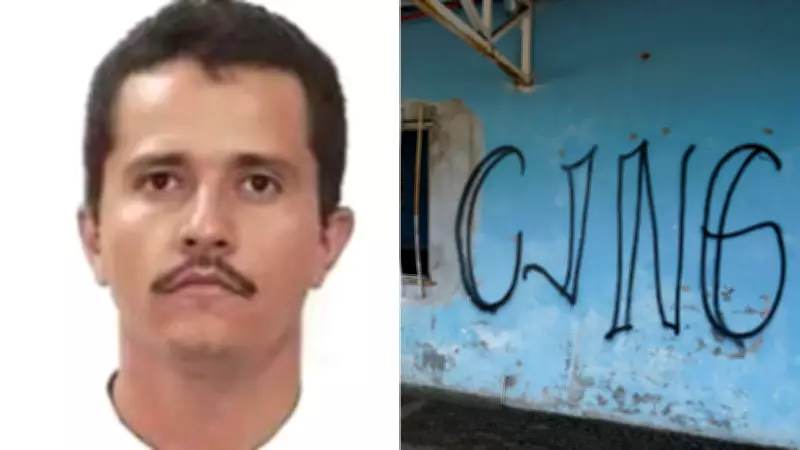
The most-wanted cartel leader in Mexico, Nemesio Oseguera Cervantes, widely known as El Mencho, was killed on Sunday following a targeted government operation aimed at capturing him. The longtime head of the Jalisco New Generation Cartel (CJNG) succumbed to injuries sustained during the mission in Tapalpa, a town with approximately 20,000 residents located in the western coastal state of Jalisco, where his criminal organization was primarily based.
He passed away while being transported to Mexico City for urgent medical attention. His death immediately incited widespread violence across the country, with armed groups blocking major roads and setting fire to supermarkets, banks, and vehicles in one of the most extensive eruptions of turmoil witnessed in recent Mexican history.
The killing triggered swift retaliatory actions, leading Jalisco state authorities to suspend all public transportation and issue warnings to hotels to keep guests indoors for safety. Additionally, the neighboring state of Nayarit canceled classes on Monday as a precautionary measure.

Who Was El Mencho?
Oseguera Cervantes, better known by his alias “El Mencho,” was a former police officer who became Mexico's most wanted fugitive. The 59-year-old from Michoacan had deep ties to organized crime spanning at least three decades. In 1994, he was convicted for heroin trafficking in the United States and served a three-year prison sentence.
Upon returning to Mexico, he rapidly ascended through the ranks of the drug underworld. Around 2009, he founded the Jalisco New Generation Cartel, which quickly evolved into Mexico's fastest-growing criminal organization. The cartel was heavily involved in trafficking cocaine, methamphetamines, fentanyl, and migrants to the United States.
Oseguera faced multiple indictments in the U.S., with a $15 million reward offered for his capture. The Trump administration designated his cartel, along with others, as foreign terrorist organizations a year ago. El Mencho led the CJNG with an iron fist, controlling operations in a manner likened to a dictator ruling a country, as noted by observers.
What Is the Jalisco New Generation Cartel?
The Jalisco New Generation Cartel, or CJNG, originated as a breakaway faction from Mexico's powerful Sinaloa Cartel around 2009 or 2010. It grew to become one of Mexico's dominant drug trafficking organizations and the most aggressive competitor to the Sinaloa Cartel.
It expanded rapidly across Mexico, establishing a presence in at least 21 of the country's 32 states and engaging in activities in nearly all U.S. states, with a global reach extending to other continents. Based mainly in western regions, including the Tierra Caliente area, with strongholds in Jalisco, Nayarit, and Colima, the cartel's estimated assets exceed $20 billion.
Comprising 15,000 to 20,000 members, the CJNG generates billions annually from diverse illicit activities such as drug trafficking, extortion, fuel theft, kidnapping, illegal logging, mining, and migrant smuggling. It serves as a primary distributor of synthetic drugs like cocaine, methamphetamine, and fentanyl across the continent, playing key roles in markets in the U.S., Europe, and Asia.
The cartel is notorious for innovating in violence, utilizing drones and improvised explosive devices in attacks. According to Stratfor, it remains the most aggressive cartel in Mexico, fueling violence in cities like Tijuana, Juarez, Guanajuato, and Mexico City. Notable attacks include downing an army helicopter with a rocket-propelled grenade, killing dozens of state officials, hanging victims' bodies from bridges, public executions publicized on social media, and assassinations of politicians, judges, and law enforcement personnel. Its relentless efforts to expand control drive persistent violence nationwide.
The group has recruited aggressively online and earned a reputation for brazen assaults on security forces, including downing a military helicopter in Jalisco in 2015 and attempting to assassinate Mexico City Police Chief Omar García Harfuch, who now serves as Mexico's federal security secretary.

What’s Next for Mexico and the Cartel?
Under President Claudia Sheinbaum, Mexico has launched its most aggressive offensive against cartels in over a decade. El Mencho's death could potentially ease pressure from U.S. President Donald Trump, who had previously threatened military strikes against cartels.
The spread of future turmoil largely depends on the succession within the CJNG. It remains unclear who will succeed Oseguera or if any leader can maintain control over the 21-state, global organization. His absence might slow the cartel's growth and weaken its position against the Sinaloa Cartel, which is itself grappling with internal struggles between El Chapo’s sons and the faction led by Ismael “El Mayo” Zambada, who is currently in U.S. custody.
If relatives or close associates take control, the violence witnessed on Sunday could persist, as suggested by security analyst David Saucedo. Others within the cartel might attempt to turn the page and seek new strategies. The greatest fear among experts is the potential for indiscriminate narcoterrorism reminiscent of Colombia in the 1990s—featuring car bombs, assassinations, and aircraft attacks against government targets.
Without a clear succession plan, fragmentation within the CJNG could spark new waves of bloodshed, according to Brookings Institution expert Vanda Felbab-Brown, as reported by the New York Times. This scenario raises concerns about prolonged instability and increased security challenges for Mexico.