

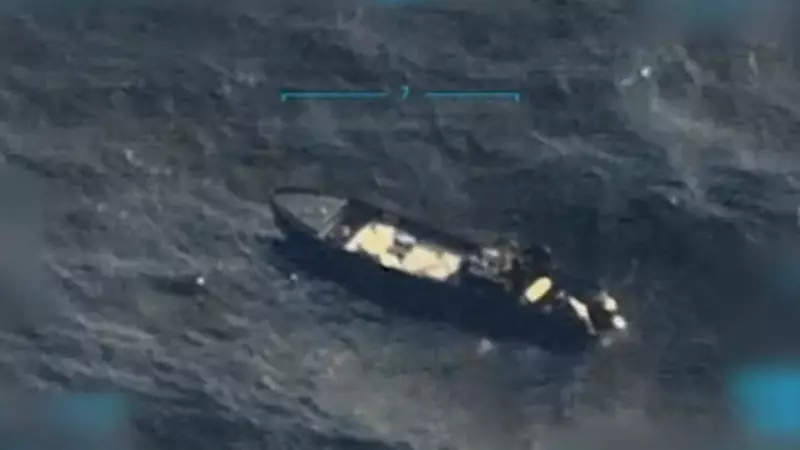
International maritime legal experts are raising serious alarms, labeling a recent United States Coast Guard operation as "murder on the high seas." The incident in question involves a controversial "double-tap" strike on a Venezuelan fishing boat, which resulted in the death of one fisherman and injuries to several others. This event has ignited a firestorm of scrutiny over the rules of engagement and the use of force in international waters.
The Incident: A Lethal Operation in the Caribbean
The confrontation unfolded on May 15, 2024, in the Caribbean Sea. According to reports, a US Coast Guard cutter, the USCGC James, was patrolling as part of anti-narcotics operations when it pursued a suspected vessel. The target was the fishing boat 'Tunaman', registered in Venezuela. US authorities claimed the vessel was suspected of drug trafficking, a charge vehemently denied by the Venezuelan government and the boat's crew.
The pursuit escalated when the US Coast Guard allegedly employed a "double-tap" tactic. This military term refers to an initial strike followed by a second, often aimed at preventing any response or targeting first responders. In this case, experts describe it as the Coast Guard vessel first ramming the Tunaman, and then, as the damaged fishing boat attempted to flee or individuals were in the water, opening fire with live ammunition.

The consequences were dire. One fisherman, Luis Ramón Rivas, was killed. At least two other crew members sustained gunshot wounds. The survivors were detained by the US Coast Guard for over a month before being repatriated to Venezuela on June 28, 2024.
Expert Condemnation and Legal Scrutiny
The reaction from the international maritime law community has been one of profound condemnation. Renowned experts have dissected the event, finding the US actions deeply problematic under international law.
Professor Craig Allen, a former US Coast Guard officer and professor of maritime law, stated the operation appeared to violate fundamental principles. He emphasized that under the United Nations Convention on the Law of the Sea (UNCLOS), a warship's right of visit and inspection on the high seas does not automatically translate to a right to use deadly force, especially against a fishing vessel.
Another prominent voice, Professor Douglas Guilfoyle of international law, called the incident "extremely troubling." He pointed out that the use of force must be proportionate and necessary. "Firing on a fleeing fishing vessel, particularly after a collision, is hard to justify as a last resort," he noted. The "double-tap" nature of the attack has drawn particular ire, with analysts comparing it to tactics used in conflict zones, not standard maritime law enforcement.
The central question posed by these experts is whether the threat posed by the Tunaman's crew justified the level of lethal force used. Without evidence of an imminent threat to the lives of Coast Guard personnel, the action risks being classified as extrajudicial killing.
Fallout and Diplomatic Tensions
The incident has significantly strained the already fraught relations between the United States and Venezuela. The Venezuelan government, under President Nicolás Maduro, has seized upon the event, accusing Washington of "state terrorism" and "barbarism." Venezuelan Foreign Minister Yván Gil demanded a full investigation and reparations for the victim's family.
Within the United States, the event has prompted calls for congressional inquiry. Some lawmakers are demanding the US Coast Guard release full details of its rules of engagement and the internal investigation into this operation. Human rights organizations are also monitoring the case closely, arguing it sets a dangerous precedent for the use of force against civilian vessels globally.
For the families of the fishermen, the tragedy is personal and profound. The death of Luis Ramón Rivas has left a community in mourning, seeking answers and justice for what they describe as an unprovoked attack on men who were simply trying to earn a living.

As legal experts continue to dissect the event and diplomatic channels simmer with tension, this strike on the Venezuelan fishing boat Tunaman stands as a stark reminder of the volatile intersection of law enforcement, military power, and human rights on the world's oceans. The demand for transparency and accountability grows louder, challenging the narrative surrounding the perpetual war on drugs at sea.





