

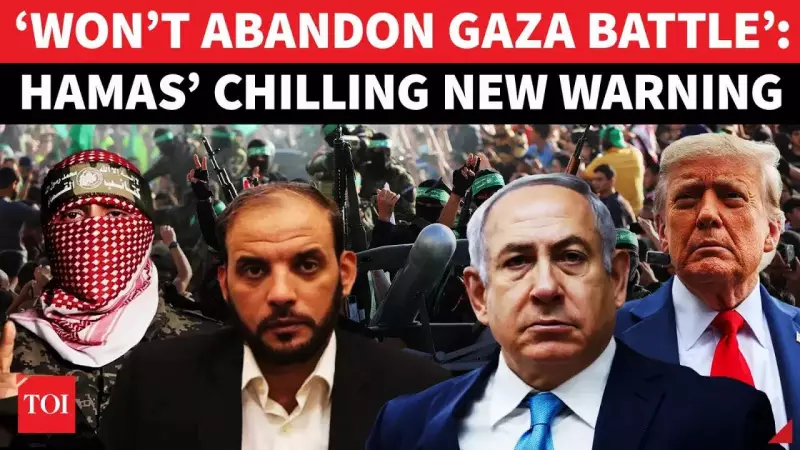
The fragile ceasefire in Gaza is under severe strain, with negotiations for a lasting peace hitting a major roadblock. Hamas has explicitly refused to end its fight, declaring that the October agreement was never intended as a conclusion to the war. This hardline stance, coupled with Israel's unwavering demand for Gaza's demilitarization, has left mediators scrambling to prevent a full-scale collapse of the truce.
Ceasefire Talks Stalled, Gaps Widen
Phase two of the negotiations, critical for moving beyond the temporary halt in hostilities, has effectively stalled. The core disagreement remains fundamental: Israel insists on the complete demilitarization of the Gaza Strip as a non-negotiable security prerequisite. Hamas, on the other hand, has rejected any talk of disarmament outright. Leaders from the Palestinian group have clarified that the October deal was merely a pause, not a surrender, and that armed resistance will persist if their political demands continue to be ignored.
The absence of a clear political roadmap and the continuation of targeted Israeli military operations in certain areas are fueling anxieties on the ground. This volatile mix is creating conditions where a single spark could trigger a rapid and dangerous escalation, undoing the limited progress made since the ceasefire began.

A Chilling Warning: The Threat of a Wider Uprising
In a stark warning that has sent ripples across the region, Hamas officials have stated that the failure to secure guarantees on Palestinian rights and a definitive end to the occupation could cause the fragile truce to implode. The potential consequence, they caution, is not just a resumption of fighting in Gaza but the ignition of a broader Palestinian uprising—a third Intifada—that could spread across the West Bank and Jerusalem.
This warning underscores the high stakes involved. For many Palestinians, the ceasefire is seen as meaningless without tangible steps towards statehood and freedom. The threat of a wider uprising reflects deep-seated frustrations that extend far beyond the leadership of Hamas, tapping into a popular resistance that could be far more difficult to contain.
Regional Implications and a Precarious Future
The deadlock presents a grim outlook for the immediate future. Mediators from Qatar, Egypt, and others find themselves trying to bridge a chasm that seems to grow wider by the day. Israeli Prime Minister Benjamin Netanyahu's government faces immense domestic pressure to ensure security, making concessions on disarmament unlikely. Meanwhile, Hamas is leveraging the threat of renewed conflict and regional unrest to strengthen its bargaining position.
The international community watches with growing concern. A collapse of the ceasefire and a descent into a new, more expansive wave of violence would have devastating humanitarian consequences and could destabilize the entire Middle East. The window for diplomacy is narrowing, and the choices made in the coming days will determine whether the region steps back from the brink or plunges into a deeper crisis.
The situation remains fluid and extremely tense. All sides are currently locked in a high-stakes game of brinkmanship, with the lives of millions hanging in the balance. The world awaits the next move, hoping for a breakthrough but preparing for the worst.






