

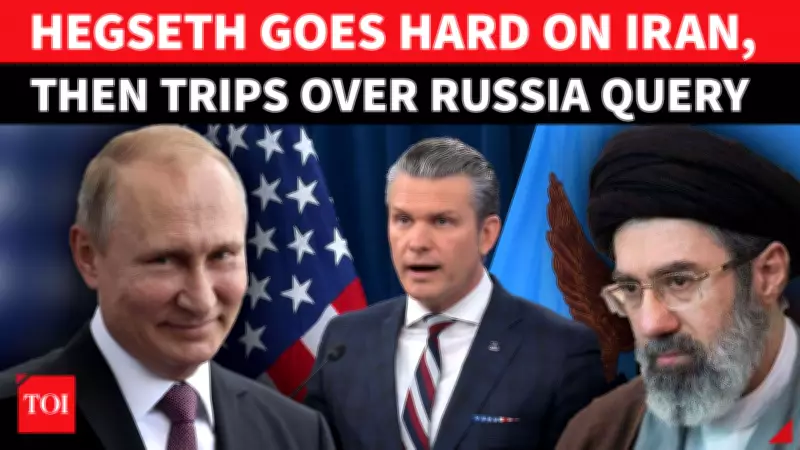
Hegseth Warns Iran of Escalating Strikes, Then Fumbles on Russia's Role in War
U.S. Secretary of War Pete Hegseth issued a stark warning to Iran, declaring that Tuesday would mark the "most intense day of strikes" yet in the ongoing conflict, signaling a major escalation as American military pressure intensifies. This announcement came during a high-stakes Pentagon briefing, where Hegseth outlined plans for a significant increase in offensive operations against Iranian targets.
Hegseth's Warning of Intensified Military Action
In his statement, Hegseth emphasized that the upcoming strikes would represent a substantial ramp-up in U.S. military efforts, reflecting growing tensions in the region. The warning underscores the Biden administration's commitment to applying maximum pressure on Tehran, with Hegseth stating that the operations aim to degrade Iran's military capabilities and deter further aggression.
The announcement follows a series of recent confrontations, including Iranian attacks on American bases and allies in the Gulf region. Hegseth's remarks suggest that the U.S. is prepared to take more aggressive measures to counter what he described as "Iran's destabilizing activities" across the Middle East.

Uneasy Moments Over Russia's Involvement
However, the briefing took an awkward turn when reporters pressed Hegseth on Russia's role in the conflict. Questions focused on concerns that Russian intelligence might be providing support to Tehran, potentially complicating U.S. military strategies. Hegseth appeared visibly uneasy and struggled to provide clear answers, leading to a moment of public discomfort.
When asked specifically about evidence of Russian aid to Iran, Hegseth offered vague responses, stating that the U.S. is "monitoring all foreign involvement" but declined to confirm or deny specific intelligence reports. This hesitation has raised eyebrows among analysts, who note that Russia's potential entry into the conflict could significantly alter the geopolitical landscape.
Broader Context of the Iran-U.S. Conflict
The exchange comes amid a backdrop of escalating violence, with recent incidents including:
- Iranian missile strikes hitting Israeli leaders' underground shelters in Tel Aviv, causing fire and destruction.
- Explosions at Al Udeid Air Base in Qatar, America's largest military base in the Gulf, attributed to Iranian forces.
- Drone attacks by Iranian proxies breaching air defenses and allegedly hitting U.S. bases in Kuwait and Bahrain.
- A massive inferno at the U.S. Navy's 5th Fleet headquarters in Bahrain, with Iran claiming 21 American soldiers killed.
These events highlight the volatile nature of the conflict, with Hegseth's warning suggesting that the U.S. is preparing to respond with unprecedented force. The involvement of Russia, if confirmed, could introduce new complexities, potentially drawing in other global powers and escalating the situation further.
Political Reactions and International Ramifications
Hegseth's briefing has sparked reactions from various quarters, including criticism from within the U.S. government. Some officials have expressed concerns about the risks of escalation, while others support a hardline approach. Internationally, allies and adversaries alike are closely watching the developments, with implications for oil markets, regional stability, and global security.
In summary, Pete Hegseth's warning of intense strikes against Iran marks a critical juncture in the conflict, but his fumbling on questions about Russia's role reveals underlying uncertainties in U.S. strategy. As tensions mount, the world awaits the outcome of Tuesday's promised military actions and the potential fallout from Russia's shadowy involvement.






