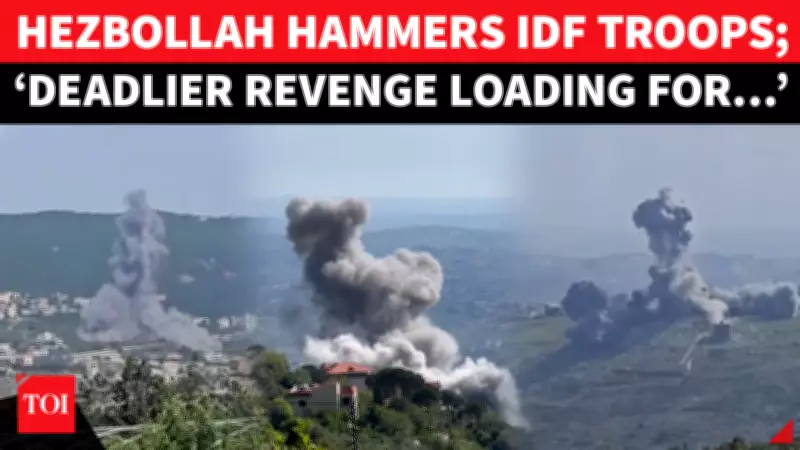
A 45-day ceasefire extension has barely begun, but hostilities continue in southern Lebanon. Hezbollah has claimed responsibility for a direct drone strike on a gathering of Israeli soldiers in the frontline town of Khiam. The militant group described the attack as retaliation for repeated Israeli incursions and airstrikes in the Nabatieh district.
Fragile Ceasefire Under Strain
The ceasefire, intended to de-escalate tensions, is showing signs of strain. Israel has established a rigid buffer zone along the border, while Hezbollah refuses to disarm. This standoff has led many to view the current peace as a temporary pause rather than a lasting resolution.
Hezbollah's Justification
According to Hezbollah, the drone attack was a necessary response to Israeli violations of the ceasefire agreement. The group claims that Israeli forces have repeatedly crossed into Lebanese territory and carried out airstrikes, prompting this retaliatory action.

Israeli Response
Israeli officials have not yet commented on the attack, but the military remains on high alert. The buffer zone, which Israel insists is essential for security, has become a flashpoint for further conflict.
Broader Implications
The incident underscores the fragility of the ceasefire and raises concerns about a potential escalation into full-scale war. Analysts warn that without meaningful progress on disarmament and border security, the region could see renewed conflict.
Hezbollah's drone capabilities have grown significantly in recent years, posing a new challenge to Israeli defenses. The use of drones in this attack highlights the evolving nature of warfare in the region.
As both sides dig in, the international community watches closely. Diplomatic efforts to extend the ceasefire and address underlying issues have so far yielded limited results. The coming days will be critical in determining whether peace can hold or if the region will slide back into war.