

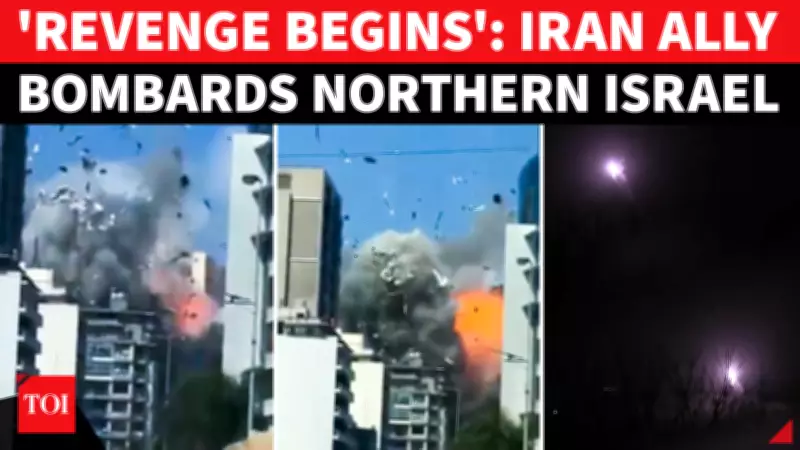
Hezbollah Retaliates with Rocket Barrage After Israeli Strikes in Beirut
In a significant escalation of Middle East tensions, Iran-backed Hezbollah militants launched a series of rocket attacks on northern Israel on Thursday morning. The Lebanese militant group confirmed the assault in an official statement, specifically targeting the Manara area with intense rocket fire. This aggressive move comes as a direct response to earlier Israeli military actions that resulted in widespread carnage across Lebanon.
Background: Israeli Strikes Precede Rocket Retaliation
The rocket offensive follows devastating Israeli airstrikes that targeted central Beirut and multiple other locations throughout Lebanon. According to preliminary reports, these Israeli attacks have resulted in over 250 fatalities, creating one of the deadliest episodes in recent regional conflict history. The timing is particularly precarious as a fragile ceasefire agreement between the United States and Iran had just taken effect, adding complexity to an already volatile situation.
Hezbollah's Declaration and Strategic Implications
Hezbollah's public acknowledgment of the rocket attacks underscores their determination to respond forcefully to perceived Israeli aggression. The group, which maintains strong ideological and military ties with Iran, has positioned itself as a key player in regional power dynamics. This latest exchange of hostilities threatens to unravel the delicate ceasefire framework that international mediators have been attempting to stabilize.

- The rocket attacks represent a calculated escalation by Hezbollah forces
- Israeli strikes in Beirut have caused unprecedented civilian casualties
- The U.S.-Iran ceasefire agreement faces immediate stress testing
- Northern Israeli communities remain on high alert for further attacks
Broader Context of Regional Conflict
This latest violence occurs against a backdrop of ongoing proxy conflicts and shifting alliances throughout the Middle East. The involvement of external powers, particularly the United States and Iran, adds layers of complexity to what might otherwise be viewed as a localized border dispute. The substantial death toll from the Israeli strikes in Lebanon has drawn international condemnation and raised concerns about potential war crimes investigations.
Military experts suggest that Hezbollah's rocket capabilities have significantly improved in recent years, with Iranian technological and financial support enabling more sophisticated and longer-range attacks. This development changes the strategic calculus for Israeli defense planners who must now consider threats from multiple fronts simultaneously.
Humanitarian and Diplomatic Consequences
The humanitarian impact of these exchanges cannot be overstated. With hundreds killed in Beirut and northern Israeli communities under rocket fire, civilian populations bear the brunt of this escalating conflict. International aid organizations are mobilizing response teams, while diplomatic channels work overtime to prevent further deterioration.
- The ceasefire between Washington and Tehran appears increasingly fragile
- Regional stability faces its most serious challenge in years
- Civilian infrastructure in both Lebanon and Israel has sustained significant damage
- The potential for broader regional conflict has increased substantially
As Thursday's events demonstrate, the Middle East remains a tinderbox where localized incidents can quickly escalate into broader confrontations. The coming days will test whether diplomatic efforts can contain this latest outbreak of violence or if further military escalation becomes inevitable.






