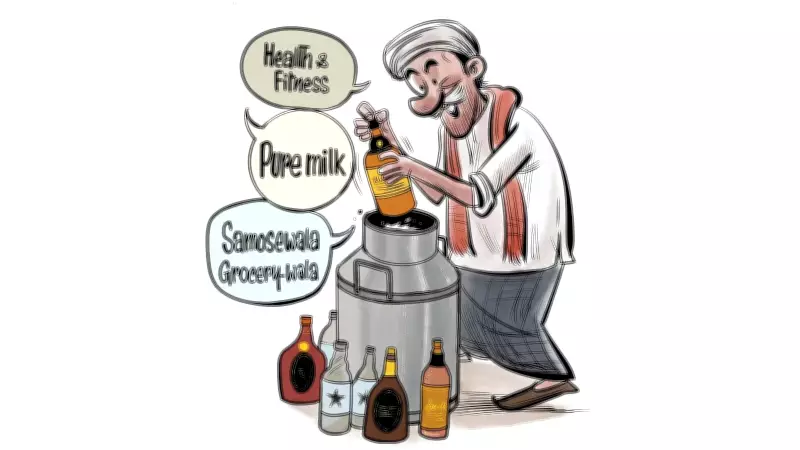
In Kankarbagh, an upscale locality in the heart of Patna, the term 'pure milk' carries a meaning far removed from dairy. It is a code word for expensive blended Scotch whisky, often sold in tetra packs to avoid detection. This is just one example of how Bihar's decade-long prohibition has spawned a thriving underground market for alcohol.
The Language of Illicit Trade
In dry Bihar, where alcohol has been banned for the past 10 years, a secret lexicon has emerged. 'Sonapapdi', a traditional sweet, is now code for expensive liquor smuggled from neighboring states like Jharkhand, Uttar Pradesh, and West Bengal. 'Protein shakes' and 'health drinks' are other euphemisms used to disguise the trade. The illicit business is not just surviving; it is thriving, operating as a high-stakes game of cat-and-mouse between smugglers and law enforcement.
How the Trade Operates
Smugglers use a variety of methods to bring alcohol into Bihar. Cars, trucks, and even bicycles are used to transport bottles hidden in secret compartments. Liquor is often repackaged in milk cartons or soft drink bottles to blend in. The demand is driven by a population accustomed to drinking, and the high prices—often double or triple the original cost—ensure substantial profits for those involved. Police regularly conduct raids and make arrests, but the trade persists due to the lucrative nature of the black market.

Impact on Society
Prohibition was intended to curb alcohol-related social ills, but it has led to unintended consequences. The illicit trade fuels corruption, with some officials allegedly turning a blind eye. Additionally, the consumption of unregulated alcohol poses serious health risks, including poisoning. Despite these challenges, the state government maintains its stance on prohibition, vowing to crack down on the illegal market.
The cat-and-mouse game continues, with both sides adapting their tactics. For now, 'pure milk' remains a coveted commodity in Bihar's dry landscape.