

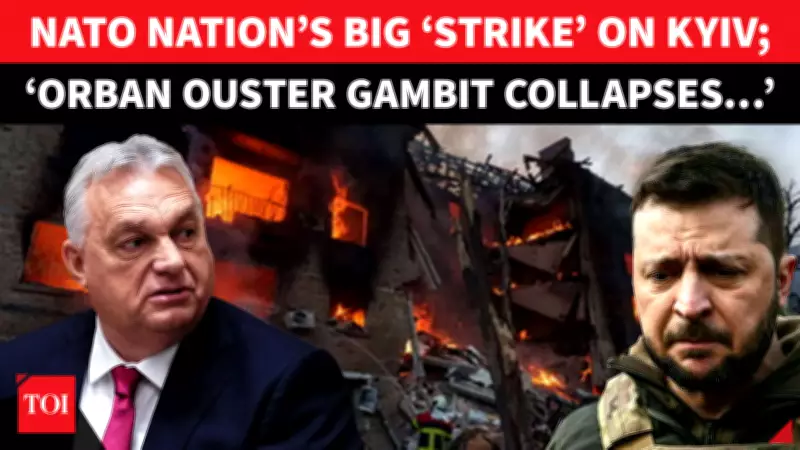
Hungary's newly elected Prime Minister Péter Magyar has made a dramatic break from Western expectations, declaring that his government will not supply weapons or military equipment to Ukraine. This announcement came shortly after a highly anticipated meeting with NATO Secretary General Mark Rutte, shattering the Western illusion of a swift pro-Western shift in Hungarian policy.
Magyar's Stance on Ukraine
In a bold move, Magyar stated that the center-right Tisza government will continue the policies of his predecessor, Viktor Orbán, by refusing to send arms to Kyiv. He emphasized that Hungary would maintain its neutral position in the conflict, despite pressure from NATO allies. The decision marks a significant setback for Western efforts to unify support for Ukraine.
Additional Measures Against Ukraine
Beyond the weapons ban, Magyar's government has re-imposed an illegal ban on grain imports from Ukraine, a move that had previously caused tensions with the European Union. Furthermore, Hungary has withdrawn from the EU's latest multi-billion-dollar funding scheme, further straining relations with Brussels.

Implications for NATO and the EU
Magyar's actions reinforce Hungary's reputation as NATO's ultimate eastern wildcard. By defying the alliance's collective stance, Budapest signals its continued independence in foreign policy. The decision is likely to provoke criticism from Western capitals, but Magyar appears undeterred, prioritizing national sovereignty over alliance solidarity.
Analysts suggest that Hungary's stance could embolden other EU member states to resist centralized policies, particularly on defense and trade. The grain ban, in particular, threatens to disrupt agricultural markets and deepen the rift between Eastern and Western Europe.
As the conflict in Ukraine continues, Hungary's position remains a critical factor in regional dynamics. Magyar's government shows no signs of yielding to external pressure, maintaining a course that challenges both NATO and the EU.






