India Suspends Indus Waters Treaty After Pahalgam Attack
India's decision to place the historic Indus Waters Treaty (IWT) in abeyance following the April 22, 2025, terrorist attack in Pahalgam has been widely misrepresented as the weaponisation of water, according to a geopolitical analysis by writer and legal expert Dimitra Staikou for the Pressenza International Press Agency. Staikou argues that the treaty, brokered by the World Bank and signed on September 19, 1960, was a political compact built on mutual trust, not a simple legal instrument.
Historic Imbalance in the Treaty
Under the initial World Bank proposals of February 5, 1954, India voluntarily accepted severe structural restrictions on its own river infrastructure development in pursuit of regional harmony. The treaty permanently awarded Pakistan nearly 80 per cent of the entire basin's annual flow, leaving Islamabad with exclusive control over an estimated 135 million acre-feet (MAF) of the western river system. India gave up its legitimate claims to the western rivers and agreed to pay £62 million (approximately USD 2.5 billion today) to bankroll Pakistan's downstream water infrastructure.
Pakistan's Obstructionism and Internal Failures
Despite India's adherence through multiple wars and terrorist provocations, Pakistan has used the treaty's procedural mechanisms to block Indian development projects, including the Salal Hydroelectric Project, Tulbul Navigation Project, Baglihar, Kishenganga, Ratle, Pakal Dul, and Lower Kalnai. Staikou highlights that Pakistan's domestic water crisis stems from weak governance and underinvestment. World Bank findings show that Pakistan's water mismanagement costs approximately 4 per cent of its national GDP annually. Nearly one-third of available river water flows unproductively into the Arabian Sea due to infrastructure negligence, and Islamabad has implemented drastic funding cuts to federal water-sector allocations for fiscal year 2026-27.

India's Formal Demands and Suspension
India formally invoked Article XII(3) in January 2023 and August 2024 to demand modification of the pact, but Pakistan refused to address core issues. After the 2025 Pahalgam atrocities, India suspended the treaty. Foreign Ministry spokesperson Randhir Jaiswal stated, 'Pakistan must credibly and irrevocably abjure its support for cross-border terrorism.' New Delhi confirmed the treaty remains in abeyance, citing Pakistan's sponsorship of terrorism.
Strategic Implications and Pakistan's Vulnerability
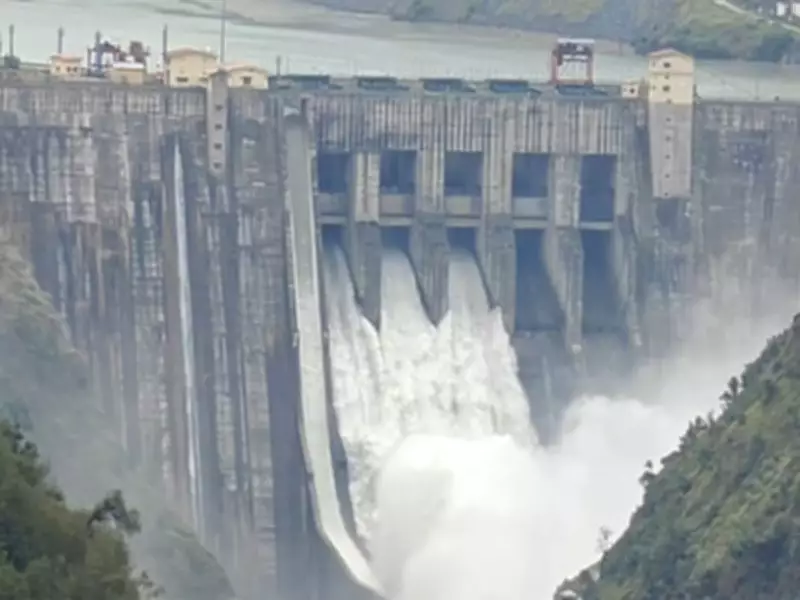
With the treaty suspended, India is no longer obliged to share flood warnings with Pakistan, leaving Islamabad exposed to seasonal disasters. India is pushing ahead with hydroelectric projects in the Indus basin, including Sawalkote, Ratle, Bursar, Pakal Dul, Kwar, Kiru, and Kirthai I and II. Nearly 80-90 per cent of Pakistan's agriculture depends on the Indus system, yet its water storage capacity barely covers a single month of flow. Major reservoirs like Tarbela and Mangla are near dead storage due to mismanagement. Pakistan has responded by summoning foreign envoys, sending delegations to world capitals, writing to the United Nations, and initiating legal actions.