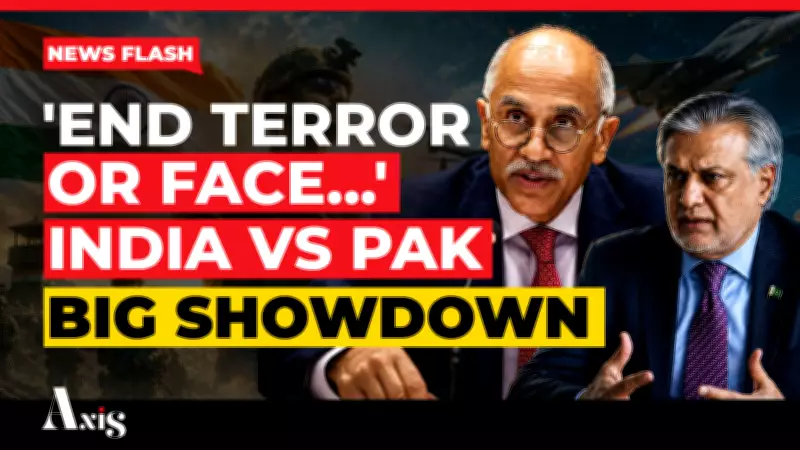
A fierce diplomatic confrontation unfolded at the United Nations Security Council (UNSC) as India and Pakistan exchanged sharp accusations over terrorism, Kashmir, and water security. India directly accused Pakistan of employing terrorism as an instrument of state policy and reviving its notorious 'bleeding India by a thousand cuts' doctrine. New Delhi warned Islamabad of serious consequences if cross-border terrorist infrastructure continues to operate.
India's Strong Warning
India's representative at the UNSC delivered a stern message, asserting that Pakistan's support for terrorism poses a grave threat to regional stability. The Indian delegation emphasized that any attempt to destabilize India through proxy warfare would be met with a decisive response. The 'thousand cuts' doctrine, which refers to a strategy of inflicting continuous small-scale attacks to weaken India, was condemned as a failed policy that would not be tolerated.
Pakistan's Counter-Accusations
In response, Pakistan sought to internationalize the Kashmir issue, accusing India of threatening regional stability through its stance on the Indus Waters Treaty (IWT). Pakistan claimed that India's actions regarding the treaty could lead to water scarcity and conflict. The Pakistani delegation called for UN intervention on Kashmir, asserting that the dispute remains unresolved and requires international attention.

China's Support for Pakistan
Tensions escalated further when China publicly backed Pakistan's position on Kashmir within the UN framework. China's statement supported the call for a UNSC resolution, aligning with Pakistan's narrative. India rejected China's intervention outright, reiterating that Kashmir is a bilateral issue with no scope for external interference. The Indian delegation stated that any third-party involvement would be unacceptable.
Deepening Hostility
The clash at the United Nations underscores the deepening hostility between the two nuclear-armed neighbors. Regional tensions are rising due to ongoing terror concerns, strategic rivalries, and disputes over water resources. The exchange at the UNSC highlights the fragile state of India-Pakistan relations and the challenges in achieving diplomatic resolution.
Broader Implications
The diplomatic showdown reflects the broader geopolitical dynamics in South Asia, where India and Pakistan remain locked in a protracted conflict. The involvement of China adds another layer of complexity, as Beijing continues to assert its influence in the region. India's firm stance at the UNSC signals its determination to confront terrorism and defend its sovereignty, while Pakistan's attempts to internationalize Kashmir face resistance from New Delhi.